
You turn the key and nothing happens. Or the starter cranks, but the engine won’t fire. Or it starts for a second, then dies. A Mercury outboard that won’t start is one of the most frustrating problems on the water – usually right when you’ve got a full cooler and a launch ramp behind you.
The good news: most no-start problems come down to a short list of culprits, and many of them you can diagnose and fix without a trip to the shop. This guide walks through nine of the most common causes, what to check first, and when it’s time to call a marine mechanic.
Run the basics first. Before you dig in: Is the kill switch lanyard clipped in? Is the shifter fully in neutral? Is the fuel tank vent open? A surprising number of “won’t start” calls end right there.
|
A note before you start: Mercury outboards span decades of carbureted, EFI, DFI, and four-stroke designs, and specific procedures, parts, and service intervals vary by model and year. Always confirm what applies to your engine against your owner’s manual or service literature before working on it. |
Symptoms at a Glance
Use this table to jump to the most likely cause for what your engine is doing. Many no-start symptoms share causes – start with the most likely, then work through the others.
| What you’re seeing | Most likely cause | Also check |
|---|---|---|
| Single click, no crank, gauges dim | 1. Dead/weak battery | 7. Starter motor or solenoid |
| Cranks normally but won’t fire | 2. Bad or old fuel | 3. Fuel delivery • 5. Spark plugs |
| Cranks fine, fires briefly, then dies | 3. Fuel delivery issue | 4. Clogged fuel filter • 9. Carb/injectors |
| Key turns, nothing happens (no click) | 1. Dead battery | 6. Kill switch • ignition switch |
| Starts cold, won’t start warm (or vice versa) | 8. Ignition system (heat-related) | 3. Fuel delivery (vapor lock) |
| Ran fine before storage, won’t start now | 2. Bad/stale fuel | 9. Gummed carb or clogged injectors |
| Rough running once it does start | 2. Bad fuel or 5. Fouled plugs | 9. Carburetor or injectors |
| mercury outboard won’t crank at all | 1. Dead battery or blown fuse | 6. Neutral safety switch • 7. Solenoid |
1. Dead or Weak Battery
A weak battery is the single most common reason a Mercury outboard won’t start. Even if your gauges light up and you hear a click when you turn the key, the battery may not have enough cranking amps left to spin the starter.
Signs it’s the battery:
- Slow cranking – labored and getting progressively slower with each attempt.
- Single click or rapid clicking – when you turn the key.
- Dim electronics – gauges and accessories drop when you hit the starter.
- Age – marine batteries typically begin losing reliable cranking performance after 3–5 years depending on type and maintenance.
How to fix it:
Check the battery with a multimeter or have it load-tested at a shop. A fully charged lead-acid battery should read around 12.6V at rest; below 12.4V suggests a problem. AGM and lithium batteries read differently – check your battery’s documentation for the correct thresholds. If the battery won’t hold a charge under load, replace it.
Also check:
Terminals and cable connections. Corroded, loose, or undersized cables are one of the most common “fake battery” problems – the battery is fine, but resistance in the connection robs cranking power. Clean terminals, check torque, and inspect the full length of battery cables for damage.
2. Bad or Old Fuel
Gasoline degrades faster than most boat owners realize, especially ethanol-blended fuel. Heat, humidity, and ethanol content all accelerate breakdown, and fuel can begin losing ignition quality within as few as 30–90 days of sitting. Stale fuel from last season is one of the leading causes of post-storage no-starts.
Signs of bad fuel:
- Won’t catch – engine cranks normally but won’t fire, or starts and immediately dies.
- Rough idle – if it does start, runs unevenly or surges.
- Off smell – fuel smells sour, varnish-like, or noticeably different from fresh gas.
- Long sit – boat stored for months without a quality fuel stabilizer.
How to fix it:
If the tank has old fuel, the cleanest fix is to drain and refill with fresh gas. Ethanol-blended fuel (E10) can absorb water over time and phase-separate, leaving a water-alcohol layer at the bottom of the tank that’s completely unusable. Topping off with fresh fuel and adding a stabilizer or treatment can help with mildly stale fuel, but it works best as prevention, not a rescue.
Prevention:
Use fuel stabilizer any time the boat will sit for more than a few weeks. For long-term storage, run the engine long enough to circulate treated fuel through the entire system.
3. Fuel Not Reaching the Engine
Even with fresh fuel in the tank, a Mercury outboard won’t start if fuel isn’t making it to the cylinders. This category covers everything from a forgotten tank vent to a failed fuel pump, and it’s worth checking methodically from the tank forward.
Check these in order:
- Tank vent – must be open. A closed vent creates a vacuum that stops fuel flow entirely.
- Primer bulb (if equipped) – squeeze it until it gets firm. If it stays soft or collapses, you have an air leak or blockage upstream.
- Fuel line – look for kinks, cracks, dry-rotted hose, or loose connections at both ends.
- Water-separating fuel filter – check for water, debris, or a heavy dark color in the bowl.
- Anti-siphon valve (if equipped) – common on permanent tank installations. These can stick closed and choke off fuel supply entirely.
Reading the primer bulb: If the bulb won’t get firm, the problem is upstream (tank vent, pickup, anti-siphon valve). If the bulb firms up but the engine still won’t start, the problem is downstream – fuel filter, fuel pump, or injectors.
4. Clogged Fuel Filter
A clogged water-separating fuel filter is one of the easiest fixes on this list and one of the most overlooked. Filters trap water, rust, sediment, and varnish from degraded fuel. Over time they restrict flow enough to cause no-start or hard-start symptoms, especially under load.
Replace the water-separating filter on the schedule in your owner’s manual. If you can’t remember the last time it was changed, change it now.
Secondary filter: Some Mercury outboards also have a smaller secondary fuel filter on the engine itself. If you’ve replaced the main water-separator and still have fuel delivery symptoms, check whether your engine has an on-engine filter that also needs servicing.
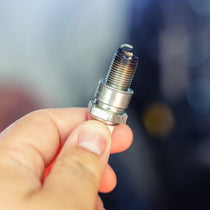
5. Fouled or Worn Spark Plugs
Spark plugs wear out over time, and they also foul – meaning they get coated with carbon, oil, or fuel residue that prevents them from sparking reliably. A Mercury outboard with one or more bad plugs may crank fine but refuse to start, or start and run rough.
Signs of plug problems:
- Won’t fire – cranks normally but won’t catch despite good fuel.
- Missing on one cylinder – starts but runs unevenly with noticeable power loss.
- Visible fouling – plugs look black, wet, oily, or have visibly burned electrodes when pulled.
- Trending worse – engine has been progressively harder to start over recent outings.
How to fix it:
Pull the plugs and inspect them. Replace with the exact part Mercury specifies for your engine – gap, heat range, and construction all matter. The wrong plug can cause its own no-start issues. Check your owner’s manual or service literature for the correct plug and torque spec. On carbureted engines, a wet-fouled plug (fuel smell, dark wet deposit) often points back to an underlying fuel delivery or choke issue.
6. Kill Switch, Neutral Safety, or Ignition Issues
Mercury outboards have safety interlocks designed to prevent the engine from starting in dangerous conditions. If any one of them fails or is misread, you get a no-start with no obvious reason why.
Usual suspects:
- Kill switch lanyard – not clipped in, or the clip is corroded, cracked, or damaged.
- Shifter position – not fully seated in neutral. Even a small amount off detent can block the start circuit.
- Ignition switch – worn or corroded internals that don’t complete the circuit reliably.
- Wiring – damaged or loose connections at the key switch, shifter, or kill switch.
Quick test: Confirm the lanyard is clipped, then wiggle the shifter slightly while turning the key. If the engine cranks in one shifter position but not another, you likely have a neutral safety switch out of adjustment or starting to fail.

7. Bad Starter Motor or Solenoid
If you turn the key and get a single loud click – or nothing at all – and you’ve confirmed the battery is good, the problem is likely in the starter circuit. The solenoid acts as a relay that engages the starter motor; either can fail, as can the wiring and connections between the battery and starter.

Signs to watch for:
- Single click, no crank – strong battery, but a click when you turn the key and nothing else.
- Intermittent – sometimes cranks, sometimes doesn’t, with no pattern.
- Grinding or whirring – mechanical noise without the engine actually turning over.
- Low voltage at starter – battery reads fine, but voltage at the starter terminal is low, often indicating a bad cable, ground, or solenoid.
Testing a starter and solenoid properly requires a multimeter and some comfort with your engine’s wiring diagram. This is a reasonable point to bring in a marine mechanic – a misdiagnosis can mean replacing parts you didn’t need to.
8. Ignition System Problems (No Spark)
If the engine cranks normally, has fuel, has good plugs, and still won’t fire, the problem is almost certainly spark. Mercury outboard no spark troubleshooting depends heavily on your engine’s generation – older engines use points, switch boxes, and stators, while newer EFI and four-stroke engines have ECM-controlled coil-on-plug systems.
Ignition components can fail outright or, more commonly, fail intermittently as they heat up. This is the classic explanation for why some engines will start cold and refuse to start warm, or vice versa.
Common ignition components that fail:
- Ignition coils (test with a spark tester at each plug)
- Stator or trigger (on older carbureted engines)
- Switch box / power pack (common fail point on older two-stroke Mercury engines)
- ECM or ignition module (on EFI and four-stroke engines)
How to approach it:
Start with a spark tester on each cylinder. No spark – or weak, inconsistent spark – on one or more cylinders points you toward the coil for that cylinder. All cylinders missing spark points to a common component: stator, switch box, or ECM. Diagnosing beyond the spark test typically requires a multimeter and, on modern engines, Mercury’s diagnostic software to read fault codes from the ECM.
Before you call a shop: Write down exactly when the no-start happens – cold, hot, after sitting, after running for a while. That pattern is the most useful diagnostic information you can give a technician.
9. Carburetor or Fuel Injector Problems
On carbureted Mercury outboards, gummed-up carburetors are a classic post-storage no-start cause. Old fuel leaves varnish in jets and passages that block fuel flow even when the delivery system is otherwise working. On EFI and DFI engines, clogged or stuck fuel injectors cause the same result.
Symptoms pointing here:
- Long sit – engine sat for an extended period with untreated fuel.
- No fire despite good basics – cranks normally, has spark, has fuel pressure, but won’t catch.
- Rough running – starts rough and runs poorly even with fresh fuel and new plugs.
- Post-storage change – was running fine before storage, now won’t start or idles poorly.
Carb cleaning is a doable DIY job on most carbureted Mercury engines if you’re comfortable with the work, but it requires the correct rebuild kit and careful attention to jet sizes and settings – don’t mix jets between carbs on multi-carb engines. Injector cleaning on EFI/DFI engines generally requires shop equipment. Periodic use of a quality fuel system cleaner and proper storage procedures are the best prevention.
When to Call a Marine Mechanic
Plenty of no-start issues are DIY-friendly: batteries, fuel filter swaps, spark plug replacement, kill switch checks, and basic fuel delivery diagnosis. But there are situations where bringing in a pro is the smarter move:
- Stumped after the basics – you’ve ruled out fuel, spark, and battery and the engine still won’t start.
- Mercury outboard no spark after coil test – you need stator, trigger, or switch box testing.
- ECM fault codes – you need Mercury’s proprietary diagnostic software to read codes.
- Warranty – the engine is under warranty and a wrong move could affect coverage. Note: if your Mercury is still in its break-in period, any service or repair should follow Mercury’s break-in and warranty guidelines.
- EFI or DFI fuel system – injector cleaning and fuel pressure diagnostics require shop tools.
Tip: Before the appointment, write down everything you’ve already checked and exactly when the no-start happens. A well-organized handoff often saves an hour of diagnostic time.

How to Prevent No-Start Issues
Most no-start problems trace back to fuel quality, battery condition, or maintenance that got skipped. A few consistent habits keep most of these off the table:
- Use fresh fuel – add a quality stabilizer any time the boat will sit for more than a few weeks.
- Change fuel filters on schedule – replace the water-separating filter per your owner’s manual; don’t wait for symptoms.
- Replace spark plugs on schedule – inspect them whenever you pull the cowling.
- Maintain your battery – keep it on a maintainer in the off-season and load-test at least once a year.
- Flush after every outing – especially critical in saltwater, but a good habit in any water. Keep cooling passages clear from day one.
- Run the engine properly during break-in – if your Mercury is new, follow Mercury’s break-in procedure for the first 10 hours. Improper break-in can cause hard-start symptoms that persist for the engine’s life.
- Annual service – small problems caught early rarely turn into no-starts.

When a Mercury outboard won’t start, the answer is almost always in one of three places: battery, fuel, or spark. Work through them in that order. Confirm the battery has enough cranking power, confirm fresh fuel is reaching the engine, and confirm the plugs are firing cleanly. Most no-start situations you’ll ever face are solved before you get past those three checks.
If you’ve cleared battery, fuel, and spark and the engine still won’t fire, you’re into ignition electronics, fuel injection, or ECM territory – and that’s where a Mercury-experienced marine mechanic earns their time. Don’t guess and start replacing parts blindly. Bring notes on exactly when the no-start happens – cold, hot, after sitting, after running – and let the right diagnostic tools do the work.
Then get back on the water.
Frequently Asked Questions
Why does my Mercury outboard click but not start?
A single loud click with no cranking almost always points to the battery or starter circuit. Start by checking battery voltage and terminal connections. If the battery is good and connections are tight and clean, the next suspects are the starter solenoid and starter motor.
Why does my Mercury outboard crank but won’t start?
If the engine cranks normally, the battery and starter are working – the issue is fuel or spark. Check fuel delivery first (tank vent, primer bulb, filter, fuel quality), then verify spark by pulling a plug and testing it. If you have both fuel and spark and it still won’t fire, it’s time for a deeper diagnosis, likely starting with fuel pressure or ECM codes.
Why won’t my Mercury outboard crank at all?
If turning the key produces nothing – no click, no crank – start with the battery, fuses, and main circuit breaker. Then check the kill switch lanyard, neutral safety switch, and ignition switch. A completely dead response with a good battery usually means an open circuit somewhere between the key and the starter solenoid.
Can old fuel keep a Mercury outboard from starting?
Yes. Gasoline can begin degrading within 30–90 days of sitting, especially ethanol-blended fuel. Ethanol also absorbs water and can phase-separate in the tank, leaving a water-alcohol layer that the engine can’t combust. If your boat has been sitting for months without a stabilizer, the fuel is one of the first things to suspect.
How do I troubleshoot no spark on a Mercury outboard?
Start with a spark tester connected between the plug wire and a known good ground. No spark on all cylinders usually points to a common component – stator, switch box/power pack (older engines), or ECM (newer engines). No spark on a single cylinder usually means that cylinder’s coil has failed. Confirm with a multimeter and your engine’s wiring diagram before replacing components.
Why does my Mercury outboard start cold but not when it’s warm?
Heat-related no-start is a classic ignition symptom – components like coils, stators, and switch boxes can function when cold but fail once they reach operating temperature. It can also be fuel-related: vapor lock can occur in hot conditions when fuel in the line vaporizes and blocks flow. The exact timing – how long it runs and how long it has to cool before it’ll start again – is your most useful diagnostic clue.
How do I know if my Mercury outboard fuel pump is bad?
Common signs of a failing fuel pump include the engine cranking but not catching, starting and then stalling, losing power under load, or a primer bulb that firms up but doesn’t stay firm. Confirming a bad pump requires checking fuel pressure with a gauge at the rail, compared against the specification in your service manual.
Should I fix a no-start Mercury outboard myself or take it to a shop?
Battery checks, terminal cleaning, fuel filter replacement, spark plug inspection and replacement, primer bulb and fuel line checks, and kill switch/shifter verification are all solid DIY work. Once you’re into ignition component testing, injector diagnosis, or ECM fault codes, a Mercury-experienced marine mechanic with the right tools will save you time and money compared to guessing.