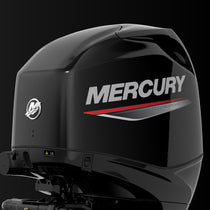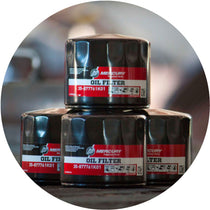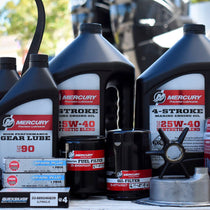

Mercury Verado fuel system problems are most often caused by a failing Fuel Supply Module (FSM) float switch, clogged fuel filters, a worn lift pump or high-pressure pump, water contamination, or fuel injector deposits. Most issues reveal themselves under high fuel demand – at wide-open throttle or during sustained high-speed running. A systematic check starting with the fuel filters and water separator resolves the majority of Verado fuel complaints before any internal components need to be replaced.
The Mercury Verado is one of the most capable outboards on the water, but its sophisticated fuel delivery system – built around an internal Fuel Supply Module that houses both pumps, a pressure regulator, and a float-controlled level switch – requires clean fuel, maintained filters, and periodic attention to components that generic outboard guides rarely cover. When something goes wrong, the symptoms are consistent and diagnosable. Here is what to look for and how to work through it.

Common Mercury Verado Fuel System Symptoms
Most Verado fuel system problems reveal themselves under high fuel demand – at wide-open throttle, during hard acceleration, or after extended high-speed running. Paying close attention to when the symptom appears is just as important as noting what the symptom is. The timing tells you where in the fuel delivery chain to look first.
Loss of Power at High RPM
If your Verado runs cleanly at idle and cruise but loses power approaching wide-open throttle, the most likely cause is a fuel delivery restriction – either a clogged filter or a failing lift pump that cannot keep up with high-demand fuel flow.
- Engine bogs or falls flat approaching wide-open throttle
- RPM ceiling lower than the normal range for your model and propeller setup
- Engine runs normally at idle and cruise, but loses power under hard acceleration
- Fuel consumption increases without a corresponding gain in performance
Rough Idle or Engine Misfires
Rough idle that persists after replacing spark plugs and doing basic engine service almost always points to the fuel delivery system – either injector deposits, a VST screen issue, or the FSM reference hose degradation described later in this guide.
- Engine shakes or vibrates at idle in gear or neutral
- Uneven, loping idle that smooths out at higher RPM
- Audible misfire or popping at low speed
- Idle RPM fluctuating up and down without throttle input
Hard Starting or Difficult Hot Restart
Hot restart difficulty – where the engine starts fine when cold but refuses to fire after a short shutdown – is one of the most common and most misdiagnosed Verado fuel complaints. It is almost always an FSM or VST issue, not an ignition problem.
- Engine cranks normally but takes several attempts to fire
- Engine starts, runs briefly, then stalls
- Cold start is fine, but hot restart after a 20–30 minute shutdown is difficult
- Engine requires excessive cranking before firing
Engine Hesitation During Acceleration
A stumble or flat spot when advancing from idle to cruising speed points to momentary fuel starvation – the engine is demanding more fuel than the system can immediately deliver.
- Stumble or flat spot when advancing the throttle from idle
- Brief loss of power followed by recovery as RPM builds
- Hesitation that worsens as engine temperature rises
- Engine feels sluggish when accelerating onto plane
Engine Stalling at Idle
- Engine dies when shifted into gear at the dock
- Stalls after returning to idle from planing speed
- Intermittent stalling in choppy water or after a hard turn
- Stalls after sitting at idle for an extended period
Fuel System Warning Alarms
The Verado's engine management system triggers an alarm and reduces power output when fuel delivery parameters fall outside acceptable ranges. Never continue running at full throttle through a fuel alarm – the engine is protecting itself from serious damage and is telling you exactly where to look. Note any fault codes displayed on your VesselView or SmartCraft gauge before shutting down; those codes are your fastest diagnostic path.
Mercury Verado Fuel System Troubleshooting Matrix
Use this table to connect your symptom to the most likely cause and where to start your inspection. Work from the top down – begin with the simplest, most accessible checks before moving to more involved diagnostics.
| Symptom | Most Likely Cause | First Check |
|---|---|---|
| Power loss at wide-open throttle | Clogged fuel filter or failing lift pump | Replace primary filter; test fuel pressure under load |
| Difficult hot restart (fine when cold) | FSM float switch or VST issue | Inspect FSM float switch; check for fuel odor at engine |
| Rough idle, won't respond to tune-up | FSM reference hose or injector deposits | Inspect boost reference hose inside FSM for cracks |
| Engine stalls, acts like it ran out of fuel | FSM float switch stuck high | Replace FSM float switch (red-wire version) |
| Code 220 or 221, engine enters reduced power | FPDM wiring fault or lift pump circuit | Inspect FPDM harness connectors before replacing pump |
| Fuel alarm at high RPM, normal at idle | Failing high-pressure pump or low fuel pressure | Test fuel rail pressure at idle and under load |
| Rough running, clears with fresh fuel | Water contamination or phase-separated ethanol | Drain water separator; inspect fuel for cloudiness |
| Fuel smell near engine, rich running | FSM boost reference hose cracked | Inspect and replace hose with Mercury update kit |
| Engine floods on startup, fuel in cylinders | Injector stuck open or FSM reference hose detached | Inspect FSM hose seating; check injector resistance |
| Gradual power loss over multiple trips | Clogged VST screen or fuel injector deposits | Replace all fuel filters; have injectors flow-tested |
|
Important Never add a primer bulb to a Verado fuel system. Pumping a primer bulb overfills the FSM and trips the vent switch, generating fault codes that require a Mercury CDS computer to clear. If a primer bulb was installed by a previous owner, remove it before performing any fuel system diagnosis. |
Fuel Supply Module (FSM) Problems – The Most Common Verado Failure
The Fuel Supply Module is the most frequently repaired fuel system component on the Verado – and the one most often absent from generic troubleshooting guides. Understanding what it does and how it fails will resolve a significant share of Verado fuel complaints that would otherwise head straight to the dealer.
What the Fuel Supply Module Is and How It Works
The FSM is a self-contained fuel management assembly mounted on the engine. Unlike a conventional outboard where the fuel tank feeds the engine through a simple line and filter, the Verado routes fuel from the tank into this module before it ever reaches the injectors. The FSM contains:
- A low-pressure lift pump that draws fuel from the tank and fills the FSM reservoir
- A float switch that signals the engine's PCM when the reservoir is full, telling the lift pump to stop
- A vapor separator section that removes fuel vapor before it reaches the high-pressure pump
- A high-pressure fuel pump that delivers pressurized fuel to the injectors
- A pressure regulator with a boost reference hose that adjusts fuel pressure based on intake manifold pressure (critical on supercharged models)
According to Mercury's own service bulletin (2009-09), fuel rail pressure on a Verado-based engine is dynamically controlled and ranges from approximately 40 to 60 PSI depending on intake manifold pressure. The PCM monitors this pressure in real time – a significant drop under load is one of the key indicators that something in the FSM circuit has failed.

Float Switch Failure – The Single Most Common FSM Problem
The FSM float switch is a simple on/off sensor – like a light switch – that tells the PCM whether the FSM reservoir is full or empty. When the float reads 'low,' the PCM activates the lift pump to refill the reservoir. When the float reads 'high,' the pump stops.
Ethanol content above 10% accelerates the degradation of the float cylinder material, causing it to go out-of-round over time. When the cylinder deforms, the float can stick in one position – either stuck high or stuck low – with very different consequences for how the engine behaves.
|
Service Bulletin Note Mercury issued a service bulletin (November 2008) recommending float switch replacement on all 135–175 Verado L4 and 200–275 Verado L6 engines. Mercury subsequently revised the float switch design multiple times. The current production version uses red wires and is the correct replacement for all affected models. If your engine has the original float switch and has not had it replaced, it is overdue regardless of hours. |
Float Stuck High: Engine Acts Like It Ran Out of Fuel
When the float sticks in the 'high' position, it signals the PCM that the FSM is always full – so the lift pump never activates to refill the reservoir. The engine consumes the fuel already in the FSM, then starves. Symptoms:
- Engine runs normally then suddenly loses power or stalls, as if it ran out of fuel
- No fuel alarm is typically triggered – the system thinks the FSM is full
- Engine may restart after a few minutes once the boat-side fuel line gravity-feeds a small amount into the system
- Problem worsens under high fuel demand (high speed, rough water)
Float Stuck Low: Lift Pump Timeout and Overfilling
When the float sticks in the 'low' position, it signals the PCM that the FSM is always empty – so the lift pump runs continuously trying to fill a reservoir it believes is never full. This leads to overfilling, fuel being pushed into the vent circuit, and fault codes. Symptoms:
- Fault codes 220, 221, or 'lift pump timeout' stored or displayed
- Fuel smell near the engine or in the bilge – fuel in vent lines
- Engine may enter reduced power mode or refuse to start
- Lift pump audible running for longer than normal after key-on
FSM Boost Reference Hose Degradation
On supercharged Verado models, a small vinyl hose inside the FSM connects the pressure regulator to the intake manifold. This reference hose allows the regulator to adjust fuel pressure based on boost pressure. Over time – typically more rapidly on engines run frequently at high RPM – the vinyl hose cracks or detaches from the regulator fitting.
When the hose fails, one of two things happens depending on engine state: at idle (no boost), the broken hose pulls a vacuum and draws fuel vapor into the intake manifold, causing a rich running condition and fuel odor. Under boost, the disconnected regulator defaults to base pressure and the engine runs lean. A Mercury service bulletin provides an updated hose kit that replaces the original vinyl with a more durable design – this is not a field repair using generic fuel line.
- Rich running at idle with fuel smell near the engine
- Black sooty exhaust at idle that clears under acceleration
- Fuel flooding – in severe cases, fuel entering cylinders through the intake manifold
- Rough idle that does not respond to spark plugs, injector cleaning, or basic engine service
FSM Float Switch Replacement – Owner Accessibility
Replacing the float switch is owner-accessible on most Verado models and significantly less expensive than a full FSM assembly replacement. The current red-wire float switch kit from Mercury runs approximately $50–150 in parts. Total repair time is typically 1–2 hours for an owner familiar with the engine.
The general procedure involves removing the lower engine cowling bolts, loosening the FSM body from the engine block, removing the top screws to drop the FSM housing, and replacing the float switch and the internal filter screen at the same time. The boost reference hose should also be inspected and replaced with the Mercury update kit during this service. Specific torque specs and connector orientation vary by model year – consult the Mercury service manual for your engine before beginning.

Mercury Verado Clogged Fuel Filters
Clogged fuel filters are the most common and most easily corrected Verado fuel system problem. Because filter replacement is inexpensive and quick, it should always be the first step in any Verado fuel diagnosis – resolving a large percentage of complaints before any further diagnosis is needed.
Symptoms of a Restricted Fuel Filter
A partially clogged filter typically produces symptoms under high fuel demand first, then progressively worsens as restriction increases.
- Power loss that appears specifically at high RPM or wide-open throttle
- Engine runs well at idle and low speed, but falls flat under load
- Gradual performance decline over several trips rather than sudden failure
- Hard starting after the engine has been sitting, particularly in hot conditions
Primary Filter vs. Engine-Mounted Filter
The Verado fuel system uses more than one filter at different points in the fuel circuit. The primary fuel water separator is located in the fuel line between the tank and engine. An additional filter screen is located inside the FSM. Consult your owner's manual to identify all filter locations on your specific model – servicing only one filter while missing another is a common oversight.

How to Inspect and Replace Fuel Filters
- Shut off the fuel supply at the tank before beginning
- Locate the primary fuel water separator and place a rag beneath it to catch residual fuel
- Remove the filter bowl and inspect the element for discoloration, debris, or water accumulation
- Replace the filter element and inspect the O-ring seal – replace it if there is any sign of wear or deformation
- Locate and replace any additional engine-mounted filters at the same time – never service one while leaving the other
- Restore fuel supply, start the engine, and check all filter housings for leaks
- Verify that engine performance has improved before returning to normal operation
|
Tip If you see water or cloudiness in the separator bowl, stop here and address the contamination before proceeding. Drain the bowl completely, replace the filter element, and read the Water Contamination section below before running the engine again. |
Mercury Verado Lift Pump and High-Pressure Pump Failure
The Verado uses two distinct fuel pumps inside the FSM – a low-pressure lift pump that draws fuel from the boat's fuel tank and fills the FSM reservoir, and a high-pressure pump that delivers pressurized fuel to the injectors. Either pump can fail independently, and they produce different symptom patterns.
Lift Pump Failure Symptoms and Diagnosis
A failing lift pump is unable to keep the FSM reservoir adequately filled under high fuel demand, causing the engine to run lean and lose power at high RPM. The PCM monitors lift pump performance and will generate a fault code when pump run time exceeds expected limits.
- Intermittent power loss at high speed that recovers when throttle is reduced
- Lift pump timeout' fault code stored or displayed on VesselView / SmartCraft
- Engine starts and runs fine at idle but stalls after sustained high-speed running
- Problem worsens with low fuel levels in the tank – especially below one quarter tank
Before condemning the lift pump, confirm that the FSM float switch is functioning correctly – a stuck-low float generates a 'lift pump timeout' code even with a perfectly good pump, because the pump runs endlessly trying to fill a reservoir the float reports as always empty.
Verado Error Codes 220 and 221 Explained
Error codes 220 and 221 are the two most-searched Verado fuel fault codes and are frequently misunderstood. Neither code by itself confirms a failed pump – in many cases the pump is fine and the root cause is a wiring harness fault, a float switch issue, or a damaged connector.
| Code | What It Indicates |
|---|---|
| 220 | Communication fault with the Fuel Pump Driver Module (FPDM) – the PCM cannot confirm pump circuit status |
| 221 | Fuel Pump Secondary Circuit fault – fault in the high-pressure pump circuit or FPDM output |
|
Important Both codes 220 and 221 can be stored without causing a no-start. The engine typically enters a reduced power mode while the code is active. The correct diagnostic sequence is: inspect wiring and connectors first, test fuel pressure second, replace components only after pressure testing confirms a delivery failure. |
High-Pressure Pump Failure Symptoms
High-pressure pump failure produces a distinct symptom pattern: the engine runs normally at idle because low fuel demand can be met even by a weakened pump, but loses power under load when demand exceeds what the pump can deliver.
- Power loss specifically at high RPM and wide-open throttle, with normal or near-normal idle performance
- Fuel alarm triggered during hard running – engine enters reduced power mode
- Difficult hot restart after extended high-speed operation – pump cannot build pressure when hot
- Misfires under heavy throttle that clear when the throttle is reduced
How to Test Fuel Pressure on a Mercury Verado
A fuel pressure test is the definitive way to confirm or rule out a pump problem. Do not replace any pump based on symptoms or fault codes alone – a failed float switch, a clogged filter, or a wiring fault will produce identical symptoms and codes.
- Consult the Mercury service manual for the location of the fuel pressure test port on your specific model
- Connect a calibrated fuel pressure gauge to the test port
- Start the engine and allow it to reach operating temperature
- Record fuel pressure at idle – on 6-cylinder Verado engines, Mercury specifies a target range of approximately 40–60 PSI at idle (dynamically controlled based on manifold pressure; verify exact specification for your model year in the service manual)
- Advance throttle and record pressure under load – a pressure drop of more than 5–8 PSI approaching wide-open throttle indicates a fuel delivery problem
- If pressure holds within specification at all RPM ranges, the pump is likely intact – shift diagnosis toward injectors, sensors, or FSM float switch
- Relieve pressure, disconnect the gauge, and reinstall the test port cap before finishing

Vapor Separator Tank (VST) Problems
The Vapor Separator Tank is a small pressurized reservoir within the FSM that conditions fuel before it reaches the high-pressure pump and injectors. Its primary job is to eliminate vapor bubbles from the fuel stream – vapor lock in a marine fuel system can cause symptoms identical to a failed pump or clogged filter, and the VST prevents this under normal operation.
What the VST Does and Why It Matters
In addition to vapor separation, the VST houses a filter screen that provides a final stage of filtration before fuel reaches the high-pressure pump. This internal screen can become clogged with varnish deposits, debris, or ethanol residue independently of the primary fuel filter – meaning you can replace the external filter and still have a restriction inside the VST that is causing the same high-RPM power loss symptoms.
Symptoms of VST Problems
- Difficult hot restart after the engine has been shut down briefly – most common VST symptom
- Rough idle that does not respond to spark plug replacement, injector cleaning, or basic engine service
- Intermittent power loss without a consistent or repeatable pattern
- Fuel odor near the engine at idle (may also indicate boost reference hose – see FSM section)
- High-RPM power loss that persists after replacing the primary fuel filter
VST Service – What Owners Can Do
The VST internal filter screen and the FSM float switch can be serviced without replacing the entire FSM assembly in most cases. This is a meaningful cost difference – the full FSM assembly runs $500–900 in parts, while the float switch kit and VST screen service typically costs under $200 in parts.
VST diagnosis and internal disassembly involves fuel system work and is ideally performed by a Verado-certified technician with access to Mercury's CDS diagnostic software to verify FSM operation before and after service. If you choose to do this work yourself, have the system pressure tested and the VST inspected before authorizing any component replacement, and ensure the reference hose is replaced with the Mercury update kit at the same time.
Mercury Verado Fuel Injector Problems
Fuel injector problems on the Verado are almost always a consequence of deferred maintenance and fuel quality rather than injector hardware failure. The injectors themselves are robust – what degrades them is ethanol residue, varnish deposits from stale fuel, and running the engine infrequently with fuel sitting in the system for extended periods.
Symptoms of Dirty or Failing Injectors
- Rough idle that persists after replacing spark plugs, cleaning the throttle body, and addressing the fuel system
- One or more cylinders misfiring – produces a distinct rhythmic roughness at idle
- Increased fuel consumption without any gain in performance
- Black sooty exhaust at idle suggests a rich condition from one or more injectors over-delivering
- Lean misfires and light-colored exhaust suggest an injector not delivering enough fuel
What Causes Injector Deposits
Injector deposits are almost always a fuel quality and usage pattern issue. Ethanol-blended fuels leave residue behind when they evaporate, gradually restricting injector flow over time. Engines that sit unused for extended periods with ethanol-blended fuel in the system are significantly more prone to deposit buildup than engines running regularly on fresh fuel. A single long off-season without stabilizer is enough to cause deposits on a previously clean set of injectors.
Professional Injector Cleaning vs. Replacement
Mild deposits respond well to professional ultrasonic injector cleaning service, which is significantly less expensive than replacement and the correct first step on a lower-hour engine. Injector replacement is the right call only when injectors are tested and found to have severely restricted flow, damaged spray patterns, or electrical faults – not based on symptoms alone. Always request flow test results when having injectors serviced.
Preventing Injector Problems
- Run the engine regularly rather than letting it sit for weeks at a time – the single most effective prevention
- Use fuel with the lowest available ethanol content
- Add a quality fuel injector cleaner to a fresh tank once per season
- Replace fuel filters on schedule to keep debris from reaching the injectors
- Use a marine fuel stabilizer whenever the engine will sit unused for more than 30 days
Water Contamination in Marine Fuel Systems
Water-contaminated fuel is one of the most damaging conditions a Verado fuel system can experience, and it enters through more pathways than most owners expect. The Verado's sophisticated fuel management system is more sensitive to water contamination than older carbureted outboards – even small amounts of phase-separated ethanol fuel can cause significant damage in a single outing.
How Water Enters Boat Fuel Tanks
- Condensation inside the tank – most common in tanks that are frequently run low; a reasonably full tank has less air space for moisture to condense
- Degraded fuel caps and deck fill O-rings – inspect these annually and replace if they show cracking or hardening
- Contaminated marina fuel – purchase from high-volume marinas with known fuel turnover
- Ethanol phase separation – ethanol in modern gasoline absorbs ambient moisture continuously; when water content exceeds the ethanol's capacity, the ethanol and water drop out of suspension as a separate layer at the bottom of the tank
Symptoms of Water in Fuel
- Engine stumbles, misfires, or stalls under load but runs normally or near-normally at idle
- Rough running that clears temporarily after burning through fresh fuel
- Hard starting following storage – phase-separated water-alcohol mixture in the system
- Visible water, cloudiness, or a distinct layer at the bottom of the fuel water separator bowl
Using a Fuel Water Separator
A quality fuel water separator is the most important single piece of protection in the Verado fuel system. Inspect the separator bowl before every trip – it takes five seconds. If you see water, cloudiness, or a distinct layer at the bottom, drain it and replace the filter element before starting the engine. Running water into the Verado's FSM causes accelerated wear that is not covered under warranty and can require full FSM replacement.
How to Remove Water from the Fuel System
- Drain the fuel water separator bowl completely and replace the filter element
- Inspect the fuel in the tank visually – shine a light into the tank and look for cloudiness or a visible water layer at the bottom
- Add a quality fuel water treatment product and run the engine at moderate speed to circulate treated fuel through the entire system
- Replace the primary fuel filter after treatment to remove residual contamination
- If contamination is severe, have the tank professionally pumped and cleaned before adding fresh fuel – contaminated fuel is not salvageable with additives alone
- Identify and correct the water entry point – inspect the fuel cap, deck fill O-ring, and tank vent before launching again
Step-by-Step Fuel System Diagnosis for Mercury Verado Engines
Work through these steps in order. Skipping ahead wastes time and risks replacing components that are not the actual cause. The majority of Verado fuel complaints are resolved in steps 1–3 without any further diagnosis.
- Start by removing and inspecting the primary fuel filter and water separator bowl – a clogged element or visible water in the bowl is the most common cause of Verado fuel complaints and takes under 10 minutes to check. Replace all filter elements before proceeding.
- Check fuel quality – inspect for water, varnish, or phase-separated ethanol. Fuel should smell fresh, not stale or sour. Phase-separated fuel has a distinct sour, alcohol smell and may appear cloudy.
- Retest engine performance after filter replacement and with fresh fuel – a large percentage of Verado fuel complaints end here.
- Confirm basic fuel supply: the tank has adequate fuel, the fuel selector valve (if equipped) is in the correct position, and on twin-tank setups the active tank is feeding the engine. Connect a known-good portable tank directly to the engine to rule out a boat-side supply restriction before continuing.
- Check the FSM float switch – if the engine acts like it ran out of fuel with no alarm, or if you have codes 220, 221, or 'lift pump timeout,' inspect the FSM float switch and replace it with the current red-wire Mercury version if it is not already the updated design.
- Test fuel pressure using a calibrated gauge at the fuel pressure test port – compare against Mercury's specification for your specific model. A pressure drop under load points to a delivery problem in the lift pump or high-pressure pump circuit.
- Inspect the FSM boost reference hose for cracks, detachment, or deterioration – particularly if the engine runs rich at idle or floods on startup. Replace with Mercury update kit, not generic fuel line.
- Inspect and clean injectors if fuel pressure is within specification but misfires or rough running persist. Have the VST screen inspected at the same time.
- Have the engine scanned for fault codes using Mercury's CDS diagnostic software – stored codes identify the specific circuit involved and significantly reduce diagnostic time. Consult your Mercury dealer about compatible diagnostic options.

Preventing Mercury Verado Fuel System Problems
The Verado's fuel system is more sensitive to deferred maintenance than a conventional outboard – it rewards consistent care and makes neglect expensive. These five habits prevent the overwhelming majority of Verado fuel system problems before they start.
Replace Fuel Filters on Schedule
Fuel filters are the cheapest insurance in the entire Verado fuel system. Deferred filter maintenance is the single leading cause of expensive Verado repairs – a clogged filter stresses both pumps and starves the injectors, causing damage that compounds over time. Consult your Mercury owner's manual for the replacement interval specific to your model, inspect the water separator bowl before every trip, and replace elements at the first sign of restriction or contamination regardless of hours.
Use High-Quality Marine Fuel
Purchase fuel from high-volume marinas with known turnover. Choose the lowest ethanol content available in your area – E10 (10% ethanol) is the maximum recommended for Verado engines; higher concentrations accelerate FSM float switch degradation, injector deposits, and reference hose deterioration. Follow Mercury's current official fuel recommendations for your specific engine model.
Run the Engine Regularly
An engine running regularly on fresh fuel stays significantly cleaner internally than one sitting for weeks between uses. Regular operation keeps fuel moving through the system, prevents deposits from forming in the VST and injectors, and keeps pump seals pliable. If the boat sits for more than two weeks, run the engine under load for at least 15–20 minutes to circulate fresh fuel through the entire system.
Use Fuel Stabilizer During Storage
Add a quality marine fuel stabilizer before any storage period longer than 30 days. Run the engine long enough after adding stabilizer to ensure treated fuel has circulated through the entire system – through the separator, into the FSM, through the pumps, and to the injectors. Stabilizer sitting only in the tank provides no protection to the components where deposits actually form.
Inspect the Water Separator Before Every Trip
Make separator bowl inspection part of your pre-departure routine – it takes five seconds and identifies water contamination before it reaches the FSM. A bowl showing water or cloudiness is a warning that must be addressed before the engine starts, not after. Drain it, replace the element if needed, identify where the water is entering the system, and correct the entry point before your next trip.
Mercury Verado Fuel System Maintenance Schedule
The following service intervals are general guidelines based on Mercury service documentation and Verado-certified technician recommendations. Always verify against your Mercury Verado owner's manual for the intervals specific to your model year and operating conditions – intervals vary between models and Mercury's official schedule takes precedence.
| Component / Task | Recommended Interval | Notes |
|---|---|---|
| Primary fuel water separator filter | Every 100 hours or annually | Inspect bowl before every trip; replace immediately if water or restriction present |
| Engine-mounted fuel filter (VST inlet) | Every 100 hours or annually | Service both filters at the same time – never one without the other |
| FSM internal filter screen | Every 200 hours or as needed | Inspect during any FSM service; replace if varnished or restricted |
| FSM float switch | Inspect at 200 hours; replace if original design | Replace with current red-wire Mercury version if not already updated |
| FSM boost reference hose | Inspect annually; replace if cracked or original vinyl type | Replace with Mercury update kit – not generic fuel line |
| Fuel injectors (cleaning) | Every 300–500 hours, or when symptoms indicate | Flow test required; clean if <10% flow restriction; replace if >20% |
| Fuel tank inspection | Annually | Inspect fuel cap O-ring, deck fill O-ring, and vent for water entry points |
| Fuel stabilizer addition | Any storage longer than 30 days | Run engine after adding to treat entire fuel system, not just tank |

Frequently Asked Questions About Mercury Verado Fuel System Problems
Why does my Mercury Verado lose power at high speed?
High-RPM power loss on the Verado is most commonly caused by a clogged fuel filter or a failing lift pump that cannot keep up with high fuel demand at wide-open throttle. Start by replacing all fuel filters and testing with fresh fuel. If performance does not improve, have fuel pressure tested under load – a pressure drop at high RPM confirms a fuel delivery problem. Also confirm the FSM float switch is the current red-wire design; a float stuck in the low position causes the lift pump to run constantly and can trigger a timeout fault that mimics pump failure.
What is the Verado FSM and why does it fail?
The Fuel Supply Module (FSM) is an internal fuel management assembly that houses the Verado's lift pump, high-pressure pump, float-controlled level switch, vapor separator, and pressure regulator. The float switch is the most common FSM failure point – ethanol content above 10% degrades the float cylinder material over time, causing it to stick in either the high or low position. Mercury issued a service bulletin recommending proactive float switch replacement and subsequently revised the design multiple times; the current version uses red wires. On supercharged models, the boost reference hose inside the FSM also degrades and should be replaced with Mercury's update kit when performing any FSM service.
What do error codes 220 and 221 mean on a Mercury Verado?
Code 220 indicates a communication fault with the Fuel Pump Driver Module (FPDM) – the PCM cannot confirm pump circuit status. Code 221 indicates a Fuel Pump Secondary Circuit fault pointing to the high-pressure pump circuit or FPDM output. Critically, neither code by itself confirms a failed pump. In many cases the pump is intact and the root cause is a corroded or loose wiring connector at the FPDM. Always inspect wiring harness connections and test fuel pressure before authorizing pump replacement based on these codes alone.
How do I know if my Verado fuel pump is failing?
A failing high-pressure pump typically produces power loss at high RPM while idle performance remains near-normal, because the pump can meet low fuel demand but cannot sustain adequate pressure under load. A fuel pressure test is the only reliable confirmation – do not replace the pump based on symptoms or fault codes alone, as a stuck float switch and injector faults produce nearly identical symptoms. On a 6-cylinder Verado, target fuel rail pressure at idle is approximately 40–60 PSI; a significant drop under load confirms a delivery problem.
How often should Verado fuel filters be replaced?
Consult your Mercury owner's manual for the service interval specific to your model. As a general guideline, replace both the primary fuel water separator element and the engine-mounted filter every 100 hours or annually, whichever comes first. Inspect the water separator bowl before every trip and replace the element immediately at the first sign of restriction, water, or contamination – regardless of hours. In areas with lower fuel quality or higher ethanol content, replacing filters more frequently than the manual specifies is worthwhile insurance.
Why does my Verado cut out at high RPM?
A Verado that runs normally then suddenly cuts out at high RPM – as if it ran out of fuel – with little or no warning alarm is the classic symptom of an FSM float switch stuck in the high position. The stuck float tells the PCM the FSM is always full, so the lift pump never activates to refill the reservoir. The engine consumes the existing FSM fuel, starves, and cuts out. The engine may restart after a few minutes once a small amount of fuel gravity-feeds in. Replace the FSM float switch with the current Mercury red-wire version.
How much does it cost to fix Mercury Verado fuel system problems?
Costs vary significantly depending on the root cause:
- Primary fuel filter service: $50–120 DIY / $80–180 at a dealer
- FSM float switch replacement: $50–150 in parts DIY / $200–500 installed at a dealer
- FSM boost reference hose update kit: $20–50 in parts DIY (typically done with float switch service)
- Lift pump replacement (inside FSM): $200–400 in parts / $400–800 installed
- Full FSM assembly replacement: $500–900 in parts / $800–1,500 installed at a Verado-certified dealer
- Professional injector cleaning: $150–350 for a full set
- Fuel pressure testing (diagnostic): $80–150 at a dealer – always worth the cost before ordering parts
Can bad fuel damage a Verado engine?
Yes – and more seriously than most owners expect. Water-contaminated fuel causes accelerated wear throughout the FSM and can require full assembly replacement after a single outing. Phase-separated ethanol fuel delivers a water-alcohol mixture directly to the lift pump and high-pressure pump, causing internal corrosion and seal degradation that is not immediately visible but progressively worsens. Fuel quality is not a secondary concern on the Verado – it directly determines how long expensive fuel system components last.
What does the Verado fuel alarm mean?
A Verado fuel alarm signals that the engine management system has detected a parameter outside its acceptable operating range and is reducing power to protect the engine. The most common fuel-related triggers are a clogged filter restricting flow, a pump fault, a float switch issue, or a sensor fault. When the alarm sounds: reduce throttle immediately, note any fault codes on your VesselView or SmartCraft display, identify the alarm pattern, and perform a systematic diagnosis before resuming operation. Never run at full throttle through a fuel alarm.
The Bottom Line
The Mercury Verado is a sophisticated, high-performance engine with a fuel system designed to match its capabilities – and a fuel system that rewards consistent maintenance. The vast majority of Verado fuel problems are predictable, preventable, and diagnosable without specialist tools if you understand the FSM, know how to test fuel pressure, and keep filters fresh. Proactive float switch replacement with the current Mercury design, a quality water separator, regular operation on fresh fuel, and filter changes on schedule will keep most Verado fuel systems running without problems for thousands of hours.