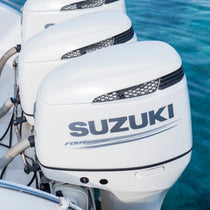

Suzuki outboards are known for their quiet power and long-lasting performance, but even the best engines wear down without proper care. Choosing the right Suzuki outboard motor parts and replacing them at the appropriate intervals ensures your engine runs clean, smooth, and strong.
Whether you’re running a DF90 on a flats boat or a DF250 on an offshore rig, this guide walks you through exactly what to replace, when to replace it, and why OEM parts matter.
Start With the Model and Serial Number
Before you order any part, locate your engine’s model and serial number. You’ll find it on a silver sticker on the side of the mounting bracket. The model will read something like DF140ATL or DF200AP. This code tells you the engine’s size, shaft length, steering style, and production run.
Select your Suzuki outboard model on PartsVu’s Shop by Engine tool to instantly filter down to compatible parts. It removes guesswork, especially if your engine has mid-year updates or less common rigging.
What to Replace—and When
Replacement intervals depend on how hard and how often you run your outboard. A weekend boater on a freshwater lake won’t wear down components as quickly as a saltwater guide pushing six trips a week. That said, Suzuki’s recommended service schedule provides a reliable foundation for most owners. Sticking to it helps prevent surprise failures, extends engine life, and protects your investment.
The key is to listen to your outboard and watch for early symptoms. Small issues—like a rough idle or weak water stream—often point to a simple part needing replacement. Don’t ignore these warning signs. Fixing them early is usually cheap and fast. Waiting too long often means bigger problems, more downtime, and higher repair bills.
Here’s a part-by-part breakdown of what to monitor, how often to replace it, and what red flags to look for.
Oil and Oil Filter
Your Suzuki 4-stroke needs fresh oil every 100 hours or once per season—whichever comes first. Running old oil through a modern engine is like trying to sprint with a 20-pound backpack. It slows everything down and increases internal wear.
Use only FC-W certified marine oil, such as Suzuki 10W-40, designed for the high RPMs and moisture exposure unique to outboards. Marine oil resists foaming, maintains pressure, and holds up under long, hot hours.
If your oil looks thin, smells burnt, or causes ticking noises or sluggish throttle response, don’t wait. Drain it and change the filter. The oil filter traps debris and metal flakes, keeping them from circulating through your engine. Always change it with the oil—never reuse an old one.

Water Pump and Impeller
The impeller is a rubber blade that spins rapidly to draw water through the cooling system. It’s small, inexpensive, and vital. If it fails, your engine overheats fast, and that can destroy everything from the head gasket to the pistons.
Replace it once a year as part of your regular service. If you boat in shallow, sandy, or muddy environments, replace it more often. Grit wears the impeller blades and shortens their lifespan.
Symptoms of a failing impeller include a weak or interrupted telltale stream, rising temperatures on your gauge, or an overheating warning buzzer. In extreme cases, you may lose power or go into limp mode to protect the engine.

Spark Plugs
Spark plugs ignite the fuel-air mix inside your cylinders. Weak, fouled, or incorrectly gapped plugs result in misfires, slow throttle response, and hard starts.
Most Suzuki outboards need new plugs every 100 hours, though hot-running models may require more frequent changes. Don’t assume all plugs are the same. Suzuki engines require specific heat ranges and gap settings. Always use OEM-recommended plugs.
If your engine stutters at low speed, idles rough, or seems to “miss” under throttle, swap in new plugs before digging into deeper diagnostics.

Fuel Filter and Fuel/Water Separator
Today’s fuel systems are incredibly sensitive, especially with ethanol in the mix. Water and contaminants can sneak in through vented fuel tanks, bad gas station fills, or just time.
Your fuel filter and water separator protect your injectors and internal parts. Change both every season, or more often if you notice symptoms like stalling, hesitation, or loss of top-end power.
If your outboard randomly cuts out, surges under load, or takes forever to start, a clogged fuel filter is often the cause, and it’s one of the easiest problems to fix.

Gear Oil
The gearcase (or lower unit) transfers your engine’s power to the propeller. Inside are gears, bearings, and seals that work under constant load and heat.
Replace the gear oil every 100 hours or annually, even if everything feels fine. If you run hard, in saltwater, or tow heavy loads, check it even more often. Catching early signs of wear can save you thousands in repairs.
Look for cloudy, milky, or gritty oil when draining. Water intrusion is a red flag, usually caused by a bad seal. You should also watch for metal flakes, which may signal internal gear damage.

Anodes
Anodes are sacrificial metal components that prevent corrosion in your engine and lower unit. Saltwater and brackish water accelerate corrosion, especially when boats are stored in the water.
Check your anodes every few months. If they’re more than half eaten, replace them. Never paint over them, and don’t mix different anode materials (zinc, magnesium, aluminum) unless you know what you’re doing. Always match them to your water type and use OEM parts.
Anodes are cheap insurance. Let them take the damage—not your engine block, prop shaft, or trim motor.

Thermostat and Pressure Valve
These regulate engine temperature and water flow. If your thermostat sticks open, your engine may never reach ideal operating temperature, causing fuel waste and poor efficiency. If it sticks closed, it can cause dangerous overheating in just minutes.
You should replace the thermostat and pressure relief valve every two to three seasons. If your engine is running cold, hot, or keeps bouncing between temps, check these first.
Ignoring thermostat issues leads to carbon buildup, premature wear, and poor performance. Replacing them early keeps your cooling system balanced and efficient.

Parts for Older Engines vs. Newer Models
Outboard technology has evolved significantly, and the parts you need often depend on your engine’s age and system type. Here’s how it breaks down:
Older Suzuki outboards (especially pre-DFI or early EFI models):
-
May use discontinued or hard-to-source parts
-
Often require part numbers to cross-reference manually
-
Benefit from PartsVu’s Shop by Engine tool, which helps you locate compatible replacements or upgraded equivalents
-
Sometimes allow more flexibility with aftermarket options, but fit and function must be verified carefully
Newer Suzuki models (especially those with digital controls or advanced emissions systems):
-
Use highly specific filters, sensors, and electrical modules
-
Require precise voltage compatibility. Incorrect parts can cause check-engine lights or system faults
-
Are more sensitive to aftermarket substitutions
-
Always perform best with OEM parts designed to integrate with onboard diagnostics and digital throttle systems
If you’re unsure what version you have, start with the model and serial number tag—then use the PartsVu Shop by Engine tool to avoid ordering the wrong component.
OEM Suzuki vs. Aftermarket: Why It Matters
Genuine Suzuki parts are built for marine conditions. They’re precision-fit, tested in salt and freshwater, and backed by warranty. You might save a few bucks with an aftermarket alternative, but you’ll risk inconsistent quality and possible long-term damage.
Especially when dealing with fuel systems, electronics, or internal engine parts, OEM parts are worth the investment. Even something as simple as a propeller washer or gasket can throw off your performance if it’s not made to Suzuki specs.
Routine Service Made Easy
If you want to keep your Suzuki in top shape without tracking dozens of individual items, go with a Suzuki Service Kit from PartsVu. These kits are custom-built for your exact engine and include everything needed for a standard 100-hour service or seasonal prep.
You can also grab a complete oil change kit, which includes the right oil, filter, gasket, and pump. No mismatched parts. No wrong weights or threads. No trips back to the marina shop.
Service Needs Based on How You Use Your Suzuki
Different boaters put different demands on their outboards. Your usage style affects which parts wear faster, and what maintenance schedule makes the most sense.
If you're a weekend freshwater angler, you'll likely see longer intervals between replacements. Your primary focus should be oil changes, fuel filter swaps, and monitoring the water pump.
If you’re running offshore in saltwater two to three times a week, anodes, gear oil, and fuel system parts will wear faster. Expect more frequent service on your impeller and thermostat as well.
Commercial operators or heavy-use guides need to treat 100-hour intervals as a minimum. Many do oil changes, fuel service, and lower unit checks monthly, not seasonally.
Knowing how you use your engine lets you plan smart, avoid mid-season surprises, and budget more accurately for parts and service kits.
DIY vs. Dealer: What You Should Know
If you’re mechanically inclined, most Suzuki outboard maintenance is DIY-friendly, especially with the help of pre-assembled kits from PartsVu. Oil changes, fuel filter swaps, and even water pump replacements can be done in a driveway or garage with basic tools and a service manual.
However, there are jobs worth handing off to a certified technician. These include:
-
Valve adjustments on four-cylinder models
-
Injector or ECU diagnostics
-
Timing chain inspections
-
Flywheel or starter issues
-
Internal corrosion or major lower unit rebuilds
Final Thoughts
Reliable performance comes from consistent care. That means using genuine Suzuki outboard motor parts, changing them at the right intervals, and sourcing them through tools you can trust.
Start with your serial number. Use PartsVu’s engine-matched search. And when in doubt, always go OEM.
If your Suzuki sounds louder than usual, idles rough, shifts hard, or runs hotter than normal, don’t wait. These are all signs that a simple part swap could save you from a costly breakdown.
Take care of your outboard, and it’ll take care of you.