
The snow has melted, the days are getting longer, and that familiar itch to get back on the water is starting to set in. If you’re like most boat owners, your vessel has been sitting dormant for months, wrapped in shrink wrap or tucked away in a garage. While it’s tempting to just charge the battery, turn the key, and hope for the best, waking up a MerCruiser sterndrive after a long winter requires a bit more finesse. Skipping steps now can lead to expensive headaches at the boat ramp—or worse, a tow home in the middle of your first outing.
Getting your MerCruiser-powered boat ready for the season is a rite of passage for the DIY boater. It’s the perfect opportunity to reconnect with your machine, spot potential issues before they become failures, and save a significant amount of money on labor costs. Plus, there is a distinct satisfaction in knowing your engine is purring because of your own hard work.
This comprehensive guide covers everything you need to know to de-winterize your MerCruiser engine and drive. We will walk through the essential checkpoints, from the battery to the prop, ensuring your boat is safe, reliable, and ready to rip. Grab your toolbox and let’s get to work.
Uncover and Inspect: The Initial Walkaround
Before you even touch a wrench, you need to perform a thorough visual inspection. Winter storage can sometimes be unkind to boats. Temperature fluctuations, moisture, and even small rodents can wreak havoc while you aren’t looking.
Start by removing the cover or shrink wrap. Ventilate the boat well—opening hatches and engine compartments to let fresh air circulate. As you do this, look for any signs of water intrusion in the bilge. Standing water is the enemy; it promotes corrosion and can damage electrical connections. If you find water, drain it and investigate how it got there.
Next, get your eyes on the engine itself. Look for any loose clamps, cracked hoses, or disconnected wires. Run your hand along the belts to check for tension and cracking. A belt that snaps on the water means you lose your alternator, water pump, and power steering all at once. If a belt looks glazed or brittle, replace it now. It’s a cheap insurance policy.
Finally, check the bilge blower hoses. These flexible ducts often get crushed or disconnected during storage or maintenance. Since the blower is your primary safety line against gas fume buildup, ensuring these hoses are intact and routed correctly is non-negotiable.
The Heart of the Beast: Battery and Electrical System
A dead battery is the number one reason boaters get stuck at the dock on launch day. Even if you left your batteries on a trickle charger, they need to be tested.
Disconnect the battery terminals and clean them thoroughly with a wire brush. Corrosion creates resistance, which makes your starter work harder and can cause heat buildup. Once the posts and clamps are shiny, reconnect them—positive first, then negative—and tighten them down with a wrench. Wing nuts are convenient, but they often vibrate loose. Use stainless steel lock nuts if possible for a secure connection.
If you have a multimeter, check the voltage. A fully charged lead-acid battery should read around 12.6 volts or higher. anything below 12.2 volts indicates a battery that is struggling. If it won't hold a charge after being on the charger overnight, it’s time to replace it.
Don't forget to test your bilge pumps and float switches. Lift the float switch manually to ensure the pump kicks on immediately. This is your boat's first line of defense against taking on water, so verify it works before the boat touches the lake.
Fluid Dynamics: Changing Oil and Gear Lube
Hopefully, you changed your engine oil and gear lube before winterizing. Old oil contains acids and moisture that can pit bearings over the winter. However, if you didn't get around to it in the fall, you absolutely must do it now.
Engine Oil
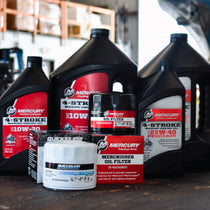
Warm up the engine (using water muffs—we’ll cover this later) to get the oil flowing. For MerCruiser engines, you generally want a high-quality synthetic blend marine oil, typically 25W-40. Marine engines run under much heavier loads than car engines; they are essentially climbing a hill constantly. Do not use automotive oil. It lacks the shear stability and corrosion inhibitors required for the marine environment.
Change the oil filter as well. A fresh filter ensures that your new oil stays clean. When installing the new filter, apply a thin film of clean oil to the gasket to prevent it from seizing, making it easier to remove next season.
Sterndrive Gear Lube
Moving to the back of the boat, check your gear lube. If you changed it in the fall, you’re just checking the level in the reservoir (if equipped) or at the vent hole. If you didn’t change it, drain the drive now.
Inspect the old fluid carefully. If it looks milky or like a chocolate milkshake, you have water in your gearcase. This indicates a leaking seal, likely at the prop shaft or the upper drive shaft. Do not launch the boat with water in the gear lube; the water will boil off under heat, leaving your gears unlubricated and leading to catastrophic failure. If the fluid is clean, refill with High Performance Gear Lube from the bottom drain hole until it weeps out the top vent hole. This bottom-up filling method pushes air bubbles out, ensuring the case is completely full.

The Cooling System: Impellers and Hoses
Your MerCruiser’s cooling system is vital. Unlike a car that uses a radiator, your boat pumps raw water from the lake or ocean to keep cool. The heart of this system is the water pump impeller.
The Impeller
The impeller is a rubber star-shaped wheel usually located in the lower unit (Alpha drives) or on the engine block (Bravo drives). Rubber degrades over time, taking a "set" (bending permanently) if it sits in one position too long. Most mechanics recommend changing the impeller every two years, or every season if you boat in sandy, silty water.
If you don't know when it was last changed, change it now. An impeller failure causes the engine to overheat in minutes, potentially cracking the block or blowing head gaskets. It is a relatively inexpensive part that protects your most expensive asset.
Hoses and Thermostats
Squeeze the cooling hoses. They should feel firm but pliable. If they feel crunchy, soft, or spongy, they are rotting from the inside out and need replacement. Inspect the hose clamps as well; rust can weaken them, causing a hose to pop off under pressure and flood the bilge.
Don't ignore the thermostat. If your engine runs too cold, it won’t burn fuel efficiently and will build up carbon. If it runs too hot, you risk engine damage. If your temperature gauge was erratic last season, replace the thermostat and the gasket during your spring prep.
Sterndrive Specifics: Bellows and Gimbal Bearings
This section is unique to sterndrive owners and is perhaps the most critical for safety. The bellows are the rubber accordion-shaped boots that seal the transom where the drive passes through. They keep the water out of the boat.
Tilt the drive all the way up and inspect the bellows. Look for cracks, dry rot, or checking in the folds. If you see any deterioration, you have to replace them. A torn U-joint bellow allows water to rush into the boat and also destroys your gimbal bearing and U-joints.
While you are back there, inspect the shift cable bellow. This is the smaller boot. If this leaks, it can seize your shift cable, making it impossible to shift gears—a dangerous situation when docking.
If you have the drive off (which is recommended every season for alignment checks), reach in and turn the gimbal bearing by hand. It should spin smoothly. If it feels gritty or notched, it needs to be replaced. Grease the bearing via the zerk fitting on the transom shield (if equipped) until fresh grease purges out.
Fuel System: Filters and Fresh Gas
Modern ethanol-blended fuel is tough on marine engines. Phase separation occurs when ethanol absorbs moisture from the air and separates from the gasoline, sinking to the bottom of the tank. This sludge is highly corrosive and combustible but won't run an engine.
Start by changing your fuel-water separating filter. This filter looks like an oil filter and is usually mounted on the front of the engine. Unscrew the old one and pour the contents into a clear glass jar. Let it sit for a few minutes. If you see a distinct layer of water at the bottom, you have water in your fuel tank that needs to be addressed.
Install a new filter, filling it with fresh gas before screwing it on to help the fuel pump prime faster.
If you have old gas in the tank from last year, treat it with a high-quality fuel stabilizer and cleaner. However, if the gas is more than a year old and wasn't stabilized, your best bet is to have it pumped out. Running bad gas can clog injectors and gum up carburetors, leading to lean conditions that can melt pistons.
The Final Drive: Propellers and Anodes
Your propeller transfers all that horsepower to the water. Remove the prop to inspect the shaft. You are looking for fishing line wrapped around the shaft, behind the thrust washer. Fishing line can cut through the prop shaft seal, allowing water to enter the gearcase (the milky oil issue we discussed earlier).
Grease the prop shaft liberally with marine grease to prevent the prop from seizing onto the shaft. Reinstall the prop and torque the nut to spec, using a new cotter pin or bending the locking tabs to secure it.
Check your sacrificial anodes (zincs). These metal tabs corrode so your engine doesn't. If they are more than 50% dissolved or covered in a hard white crust that won't wire-brush off, replace them.
- Saltwater: Use Zinc.
- Brackish Water: Use Aluminum.
- Freshwater: Use Magnesium.
Using the wrong anode material renders them ineffective. For example, zincs in freshwater develop a coating that stops them from working, leaving your expensive outdrive unprotected against galvanic corrosion.

Power Trim and Steering Fluids
Check the power trim pump reservoir. It is usually a translucent plastic tank mounted inside the transom. The fluid should be bright red (Automatic Transmission Fluid) or clear/yellow (Power Trim Fluid), depending on your specific model’s manual. If it’s low, top it off. If it looks milky, water has gotten into the system, likely through the trim ram seals on the drive.
Check the power steering fluid level as well. The pump is mounted on the engine, similar to a car. Low fluid will cause the pump to whine and make steering difficult.
The First Start: Ears on, Water Flowing
You are almost there. Before heading to the ramp, you need to fire the engine up on land. This confirms everything works without the stress of being at a busy dock.
- Connect the muffs: Place the "earmuffs" (motor flusher) over the water intake vents on the lower unit.
- Turn on the water: Turn the garden hose on full blast. You must have water pressure before starting the engine.
- Start the engine: With the drive in neutral, start the engine. Watch the oil pressure gauge immediately. It should rise within seconds.
- Check for water flow: Look at the exhaust ports on the transom shield. You should see water exiting. If no water comes out within 15-20 seconds, shut it down immediately. Your impeller isn't pumping.
- Check for leaks: With the engine running, open the engine hatch. Look for dripping fuel, oil, or water. Listen for hissing vacuum leaks or screeching belts.
- Warm it up: Let it run until it reaches operating temperature (usually around 160-175°F). This confirms the thermostat is opening and cycling correctly.
Safety Gear and Final Polish
Your engine is ready, but is the boat legal? Check the expiration dates on your fire extinguishers and flares. Ensure you have enough life jackets for your capacity rating and that they are in good condition (no rips or broken buckles). Check that your horn works and your navigation lights turn on.
Finally, give the hull a wash and a coat of wax. A slick hull is more fuel-efficient, and a layer of wax protects the gelcoat from UV oxidation. Clean the vinyl seats with a marine-grade cleaner and protectant to keep them soft and prevent cracking.
Ready for Launch
De-winterizing your MerCruiser isn't just a chore; it’s a reset button. It clears away the cobwebs of winter and prepares your vessel for the adventures ahead. By methodically going through these systems—fluids, electrical, cooling, and drive—you are ensuring reliability.
You didn’t buy a boat to work on it at the dock; you bought it to enjoy time with friends and family. This preventative maintenance is the key to unlocking a stress-free summer. So load up the cooler, check the plug (seriously, check the drain plug), and launch with confidence. Here is to a safe and spectacular boating season!