
The Yamaha F150 service schedule is built around a simple idea: service the engine by both hours and calendar time, whichever comes first. For most owners, that means a break-in service early in the engine’s life, a recurring annual or 100-hour service, and larger inspection points at longer intervals.
A typical Yamaha F150 service schedule includes engine oil and filter service, lower-unit gear oil changes, fuel filter inspection or replacement, spark plug inspection, anode checks, water pump inspection, propeller inspection, steering checks, battery inspection, and cooling-system checks. Some items are practical for a careful DIY owner. Others, such as valve clearance, timing belt inspection, internal anodes, and diagnostic-code work, are usually better handled by a Yamaha dealer.
Exact Yamaha F150 service intervals can vary by model year, serial range, usage, saltwater exposure, and engine configuration. Always confirm the final checklist in the owner’s manual or service manual for your specific F150.

Quick Yamaha F150 service schedule overview
| Service interval | What it usually covers | Why it matters |
|---|---|---|
| Before every use | Oil level, fuel system, telltale flow, propeller condition, steering, battery, warning indicators | Catches obvious problems before leaving the dock |
| After every use | Freshwater flush, exterior rinse, visual inspection | Reduces salt, sand, and corrosion buildup |
| First 20 hours / break-in service | Engine oil and filter, lower-unit gear oil, fastener and linkage inspection, general checks | Removes break-in contaminants and confirms the engine is settling in correctly |
| Every 50 hours or mid-season | Visual checks, lubrication points, fuel-water separator, propeller shaft, anodes, battery, steering | Useful for heavy-use, saltwater, or commercial-style operation |
| Every 100 hours or annually | Engine oil and filter, gear lube, fuel filters, spark plug inspection, anodes, water pump inspection, throttle/shift/steering checks | The core Yamaha F150 service interval for most owners |
| 300-hour / multi-year service | 100-hour items plus deeper inspections such as water pump service, thermostat checks, valve clearance, timing belt inspection, and model-specific items | Addresses components that do not need attention at every annual service but should not be ignored |
| Winterization or lay-up | Fuel treatment, fogging/storage procedures where applicable, battery care, corrosion protection, full flush | Prepares the engine for storage and helps prevent fuel, corrosion, and moisture issues |
This table is a general guide. Yamaha’s official maintenance resources direct owners to the manual for model-specific requirements, and the exact Yamaha F150 service schedule should always be matched to the engine’s model year and serial number.
Why Yamaha F150 service intervals matter
The Yamaha F150 is a four-stroke outboard designed to run for long periods under changing load, water, fuel, and weather conditions. Even when it sounds smooth, the engine is still dealing with heat, fuel residue, oil contamination, water exposure, salt, electrical corrosion, and lower-unit wear.
The 100-hour service gets the most attention because it combines several important jobs into one maintenance point. Engine oil has been through a season of heat cycles. Gear lube may show early signs of water intrusion. Fuel filters may have caught debris or water from the tank. Anodes may be partly consumed. The water pump may still be working, but the impeller can begin to take a set from use and storage.
That is why Yamaha F150 service intervals should not be treated as optional reminders. They are inspection points that help you find problems while they are still small and visible.
Yamaha F150 service schedule by interval
Before every trip
Before starting the engine, take a few minutes to check the basics. These quick checks can prevent many on-water problems.
Check:
- Engine oil level
- Fuel level and fuel line condition
- Primer bulb condition, if equipped
- Battery charge and clean terminals
- Propeller damage or fishing line around the shaft
- Steering movement
- Throttle and shift feel
- Cooling-water telltale after startup
- Warning lights, alarms, and gauges
- Cowling fit and latch condition
A strong telltale stream does not replace a full cooling-system inspection, but it is still one of the first signs most owners can see. If the stream is weak, intermittent, or missing, stop and investigate before running the engine under load.
After every use
After-use care is part of the Yamaha F150 service schedule even though it is not always listed the same way as hour-based maintenance. It matters most in saltwater, brackish water, sandy water, or shallow-water use.
After each outing:
- Flush the engine with fresh water according to Yamaha’s procedure for your model
- Rinse salt and debris from the exterior
- Inspect the lower unit and propeller
- Look for oil, fuel, or water leaks
- Check for fishing line around the prop shaft
- Let the engine dry before covering it tightly
- Keep the cowling vents clear
When flushing on muffs, do not run the engine dry and do not rev the engine hard. Yamaha warns that an outboard should not be started out of water unless the correct external lower-unit flushing adapter is supplying water, and operation should stay at no more than an advanced idle with good water pressure.

First 20-hour Yamaha F150 service
The first service after break-in is important because new engines shed small amounts of break-in material as parts seat. This service gives the engine a clean start for the rest of its maintenance life.
A typical first Yamaha F150 service includes:
- Engine oil change
- Engine oil filter replacement
- Lower-unit gear oil change
- Fastener inspection
- Throttle and shift linkage check
- Steering check
- Fuel-system inspection
- Cooling-water flow check
- Propeller and prop shaft inspection
- General leak inspection
The first service interval is sometimes discussed as a 20-hour service, but owners should follow the manual for their exact model year. If the engine is new to you but not brand new, confirm whether the break-in service was documented.
Yamaha F150 50-hour service checks
The 50-hour point is useful for engines that see heavy use, saltwater use, frequent trolling, shallow water, or long idle time. Not every item at 50 hours is a replacement item, but it is a good point for inspection.
At 50 hours or mid-season, check:
- Fuel-water separator
- On-engine fuel filter condition
- Battery terminals
- Anodes
- Propeller and prop shaft
- Steering system
- Throttle and shift cable movement
- Cowling seals and latches
- Visible hoses and belts
- Water flow from the telltale
- Oil level and general engine condition
If your F150 is used in saltwater, sandy water, or muddy water, inspect the cooling system more closely. Yamaha’s maintenance guidance notes that impeller and water pump assembly inspection should be performed every year as a general rule, with the owner’s manual used for the engine-specific interval.
Yamaha F150 100-hour service
The Yamaha F150 100-hour service is the main recurring maintenance point for most owners. It is usually performed once per season or every 100 engine hours, whichever comes first.
A typical Yamaha F150 100-hour service includes:
- Engine oil and filter change
- Lower-unit gear oil change
- Fuel-water separator inspection or replacement
- On-engine fuel filter inspection or replacement
- Spark plug inspection
- Anode inspection
- Water pump inspection
- Propeller and prop shaft inspection
- Throttle and shift linkage inspection
- Steering inspection
- Battery and electrical inspection
- Cooling-system inspection
- Lubrication points
- Fastener and visual safety checks
- Test run and leak check
Yamaha’s official Maintenance Matters chart includes key recurring maintenance items such as 4-stroke engine oil, fuel/water separating filters, on-engine fuel filters, gearcase lube, spark plugs, water pump assembly, corrosion protection, flushing, and winterization/lay-up items, while telling owners to verify requirements in their owner’s manual.
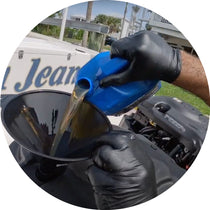
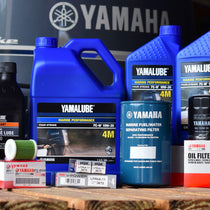
Engine oil and filter service
Engine oil is one of the core Yamaha F150 service items. Oil carries away heat, suspends contaminants, protects internal surfaces, and keeps the powerhead lubricated.
Basic process:
-
Run the engine briefly according to safe flushing procedures so the oil can drain more easily.
-
Shut the engine down.
-
Position the engine as recommended in the service manual.
-
Place a drain pan under the drain point.
-
Remove the drain plug and allow the oil to drain fully.
-
Replace the sealing washer if required.
-
Remove and replace the oil filter.
-
Lightly oil the new filter gasket before installation.
-
Refill with the correct Yamaha-specified four-stroke marine oil.
-
Start the engine, check for leaks, shut down, and recheck the oil level.
Do not guess the oil capacity. Yamaha F150 oil capacity can vary by generation and configuration. Use the owner’s manual or service manual for the exact amount, oil specification, filter type, and torque values.
Lower-unit gear oil service
The lower unit has its own oil supply. Changing it is important, but inspecting the old gear oil is just as important.
During a Yamaha F150 service, gear oil can reveal:
- Water intrusion
- Seal problems
- Metal debris
- Overheated lubricant
- Lower-unit wear
Basic process:
-
Keep the engine vertical.
-
Place a drain pan below the lower unit.
-
Remove the lower drain/fill screw.
-
Remove the upper vent screw.
-
Let the oil drain completely.
-
Inspect the color and consistency.
-
Refill from the lower hole until oil appears at the upper vent.
-
Install the upper plug first.
-
Install the lower plug.
-
Use new sealing washers where specified.
Healthy used gear oil should not look milky. If the oil looks like a pale, creamy mixture, water may be entering the gearcase. Do not ignore that finding. A lower-unit pressure and vacuum test may be needed before the engine goes back into regular use.
Fuel filter service
Fuel quality has a direct effect on the Yamaha F150. The fuel system has to protect injectors and fuel-system components from water, ethanol-related residue, tank debris, and sediment.
A complete Yamaha F150 100-hour service usually includes attention to:
- Boat-mounted 10-micron fuel-water separating filter
- On-engine fuel filter
- Fuel line condition
- Primer bulb condition, if equipped
- Fuel tank venting
- Fuel cap gasket
- Signs of water or debris in drained fuel
If the water-separating filter contains water, rust-colored sediment, or unusual debris, do not simply replace the filter and move on. Check the tank, fuel fill, vent, and fuel source.
Before opening fuel-system components, follow the service manual procedure. EFI systems can hold fuel pressure, and fuel leaks around a hot engine are a safety concern.
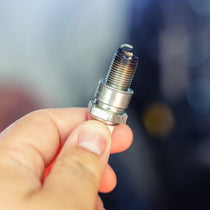
Spark plug inspection
Spark plugs tell you how the engine has been running. On the Yamaha F150, they should be inspected at service and replaced according to the manual or condition.
A normal plug often shows:
- Light tan, gray, or off-white coloring
- Clean electrode edges
- No heavy oil residue
- No wet fuel smell
- No damaged porcelain
- Even appearance across cylinders
Warning signs include:
- Black, sooty deposits
- Wet fuel fouling
- Oil fouling
- White blistered electrode
- Cracked insulator
- Rounded electrode
- One plug that looks very different from the rest
- Use the exact spark plug type, heat range, reach, gap, and torque specification Yamaha lists for your F150 model. A plug that seems “close enough” can cause misfire, fouling, or poor running under load.
Water pump and impeller inspection
The water pump moves cooling water through the engine. A weak pump can lead to overheating, reduced performance, warning alarms, and internal damage.
At annual or 100-hour service, inspect the water pump and impeller according to the manual and usage conditions. Heavy sand, silt, shallow water, saltwater, long storage, or weak telltale flow can justify earlier attention.
Look for:
- Cracked impeller vanes
- Missing vane pieces
- Vanes curled permanently in one direction
- Wear on the cup or plate
- Heat discoloration
- Damaged gaskets
- Weak telltale flow after reassembly
- If the impeller is replaced, inspect the housing, wear plate, key, gaskets, and related parts at the same time. A water pump job should be followed by a careful water-flow check before the engine is run under load.
Anode inspection
Anodes protect the engine from galvanic corrosion. They sacrifice themselves so the more important metal parts of the outboard are protected.
During Yamaha F150 service, inspect:
- Lower-unit anodes
- Bracket anodes
- Trim-tab anode, if equipped
- Internal anodes where applicable
- Mounting screws and contact surfaces
- Corrosion around the anode mounting area
Do not paint anodes. Do not install an anode material without checking what Yamaha specifies for your water type. Saltwater, brackish water, and freshwater may call for different anode materials.
Replace anodes when they are significantly worn, loose, damaged, or no longer making proper contact.
Propeller and prop shaft inspection
The propeller is easy to overlook during engine service, but it can show problems that affect performance and lower-unit health.
Check:
- Bent blades
- Nicks and missing material
- Fishing line behind the prop
- Prop shaft seal condition
- Cotter pin condition
- Thrust washer condition
- Prop nut security
- Unusual play or wobble
Fishing line wrapped behind the prop can damage the prop shaft seal and allow water into the gearcase. If the gear oil is milky and fishing line is found behind the prop, the two issues may be connected.
Steering, throttle, and shift checks
The Yamaha F150 service schedule should include a careful check of controls. Smooth steering and predictable throttle/shift movement are safety items, not just comfort items.
Inspect:
- Hydraulic steering fluid level and leaks
- Steering cylinder corrosion
- Mechanical steering cable movement, if equipped
- Throttle cable movement
- Shift cable movement
- Linkage hardware
- Binding or stiffness
- Remote control operation
- Neutral safety function
- Any binding, delayed shifting, or stiff steering should be addressed before the next trip.
Battery and electrical inspection
Electrical problems often start as small corrosion or connection issues. During service, inspect:
- Battery terminals
- Battery hold-down
- Cable ends
- Ground connections
- Main harness plugs
- Fuse holders
- Trim and tilt wiring
- Charging output, if needed
- Warning indicators
- Gauge function
- Clean, tight, corrosion-free connections are especially important on EFI outboards.
300-hour Yamaha F150 service
The 300-hour service is a deeper maintenance interval. It generally includes the 100-hour items plus additional inspections or replacement items specified by Yamaha for the model.
Depending on the model year and manual, 300-hour or multi-year service may include:
- Water pump service
- Thermostat inspection
- Pop-off valve inspection, where applicable
- Valve clearance inspection
- Timing belt inspection
- Internal anode inspection
- More detailed cooling-system checks
- Deeper fuel-system inspection
- Dealer diagnostic scan
- Additional lubrication and fastener checks
This is the point where a Yamaha dealer becomes more important for many owners. Yamaha’s maintenance FAQ specifically notes that some procedures, such as checking valve clearance and inspecting a timing belt, should be done by an authorized Yamaha dealership.
Yamaha F150 annual service vs. 100-hour service
For many owners, annual service and 100-hour service are effectively the same checkpoint because the boat may not reach 100 hours in a season. If you only run 40 or 60 hours in a year, you should still follow annual maintenance guidance.
Marine engines sit in a harsh environment even when they are not running. Fuel ages. Moisture builds. Anodes corrode. Rubber parts age. Batteries discharge. Salt and humidity work into fittings and terminals.
Use whichever comes first:
- 100 engine hours
- One boating season
- One year
- Storage or winterization point
- Low hours do not automatically mean the engine can skip maintenance.
Yamaha F150 service checklist
Use this as a working checklist, then confirm each item against your owner’s manual.
Engine and lubrication
- Change engine oil
- Replace oil filter
- Check for leaks
- Confirm oil level after test run
- Check belts and visible rubber parts
- Inspect engine mounting points
Lower unit
- Change gear oil
- Inspect drained oil
- Replace sealing washers as required
- Inspect propeller
- Remove fishing line from prop shaft
- Check prop nut and cotter pin
Fuel system
- Inspect fuel-water separator
- Replace filter element as required
- Inspect on-engine fuel filter
- Check fuel lines
- Check primer bulb, if equipped
- Look for leaks after priming
- Inspect fuel cap and vent
Cooling system
- Check telltale flow
- Inspect water pump condition
- Inspect impeller condition
- Check thermostat service interval
- Inspect water intake screens
- Flush according to Yamaha procedure
Ignition and electrical
- Inspect spark plugs
- Replace plugs if due or worn
- Check plug condition by cylinder
- Inspect battery terminals
- Check harnesses and visible connectors
- Confirm warning lights and alarms function
Corrosion protection
- Inspect external anodes
- Inspect internal anodes where applicable
- Check bonding surfaces
- Inspect trim and tilt components
- Apply corrosion protection where specified
Controls and safety
- Check throttle movement
- Check shift movement
- Inspect steering
- Check neutral start function
- Inspect cowling latches
- Confirm smooth idle and test-run behavior

DIY Yamaha F150 service: what owners can usually handle
A careful owner with the correct manual, tools, and workspace can usually handle many 100-hour items.
Common DIY-friendly jobs include:
- Engine oil and filter change
- Lower-unit gear oil change
- Fuel-water separator replacement
- Spark plug inspection or replacement
- External anode replacement
- Propeller inspection
- Battery-terminal cleaning
- Basic steering and linkage inspection
- Freshwater flushing
- Basic corrosion prevention
DIY service requires documentation. Keep a record of the date, engine hours, parts used, fluids used, and any observations. Save photos of unusual findings such as milky gear oil, damaged anodes, or fouled spark plugs.
When to use a Yamaha dealer
Use a Yamaha dealer or qualified marine technician when the job requires model-specific tools, diagnostic software, deeper disassembly, or factory procedures.
Dealer-level items often include:
- Valve clearance inspection
- Timing belt inspection
- Internal anode replacement
- Thermostat or pop-off valve service if difficult to access
- Fuel-injection diagnostics
- Yamaha diagnostic system scan
- Warranty-related service work
- Lower-unit seal testing
- Milky gear oil follow-up
- Overheating diagnosis
- Repeated alarms or fault codes
If the engine is still under warranty, check the warranty documents and Yamaha guidance before deciding how to handle service documentation.
Common Yamaha F150 service mistakes to avoid
Guessing the model year or generation
The F150 has been produced in different versions. Parts, capacities, plug types, and procedures can vary. Use the model code and serial number, not just the horsepower.
Reusing sealing washers
Drain plug washers and sealing washers are small parts, but they help prevent leaks. Replace them when the service manual calls for it.
Ignoring milky gear oil
Milky lower-unit oil suggests water intrusion. Refilling and running without finding the cause can lead to lower-unit damage.
Using the wrong spark plugs
Spark plug reach, heat range, gap, and torque matter. Use the plug Yamaha specifies for your exact engine.
Running hard on flush muffs
Flushing is not the same as operating under normal water load. Keep the engine within Yamaha’s flushing guidance.
Treating a weak telltale as minor
A weak telltale can be a blocked outlet, but it can also point to cooling-system trouble. If the engine is overheating, shut it down and diagnose.
Skipping corrosion checks
Anodes, electrical terminals, trim components, and mounting hardware need attention, especially in saltwater.
How to document Yamaha F150 service
Good service documentation should include:
- Date of service
- Engine hours
- Engine model and serial number
- Parts used
- Fluids used
- Spark plug condition
- Gear oil condition
- Anode condition
- Fuel filter findings
- Water pump findings
- Any warnings, alarms, or codes
- Photos of notable issues
- Dealer notes, if applicable
This record helps with troubleshooting later. If a problem appears after service, you can look back and see what changed.
Frequently asked questions
What is the Yamaha F150 service schedule?
The Yamaha F150 service schedule generally includes a first service after break-in, recurring annual or 100-hour service, and deeper service at longer intervals such as 300 hours. Common service items include engine oil, oil filter, gear lube, fuel filters, spark plugs, anodes, water pump inspection, steering, controls, and cooling-system checks.
What are the main Yamaha F150 service intervals?
The main Yamaha F150 service intervals are before each use, after each use, first break-in service, 50-hour or mid-season checks for heavier use, annual or 100-hour service, and larger multi-year intervals such as 300-hour service. Always confirm the exact schedule in your owner’s manual.
What is included in a Yamaha F150 100-hour service?
A Yamaha F150 100-hour service usually includes engine oil and filter, lower-unit gear oil, fuel filter checks, spark plug inspection, anode inspection, water pump inspection, propeller inspection, battery and electrical checks, steering checks, throttle and shift checks, lubrication points, and a test run.
Is Yamaha F150 service required every year?
Yes, annual service is recommended even if the engine does not reach 100 hours. Fuel, oil, seals, anodes, batteries, and corrosion protection can still age or degrade while the boat is sitting.
Can I do Yamaha F150 service myself?
Many basic Yamaha F150 service tasks can be done by a mechanically inclined owner with the correct manual and tools. Dealer-level work is recommended for valve clearance, timing belt inspection, internal anodes, diagnostics, warranty-related work, and any issue involving fault codes or major disassembly.
How often should Yamaha F150 gear oil be changed?
For most owners, gear oil is changed at the annual or 100-hour service interval. Check the manual for the exact requirement for your model. Always inspect drained gear oil for water, metal, or discoloration.
How often should the Yamaha F150 water pump be serviced?
Water pump and impeller inspection should be part of regular service, especially annually or at 100 hours. Replacement timing depends on model, use, water conditions, storage, and inspection findings. Sand, silt, saltwater, overheating, or weak telltale flow may call for earlier service.
Does the Yamaha F150 300-hour service include everything in the 100-hour service?
In general, the 300-hour service includes the recurring 100-hour items plus deeper inspections or service items specified by Yamaha for the model. These may include water pump service, thermostat checks, valve clearance inspection, timing belt inspection, internal anodes, and diagnostic checks.
What happens if I miss a Yamaha F150 service interval?
A missed interval does not always cause immediate failure, but it increases the chance that oil, gear lube, filters, anodes, water pump parts, or corrosion issues go too long without inspection. If you are behind, catch up with the correct service rather than waiting for the next interval.
Where do I find the exact Yamaha F150 service schedule for my engine?
Use the owner’s manual or Yamaha service manual for your exact model code, model year, and serial range. Yamaha’s online owner resources can help locate manuals, and an authorized Yamaha dealer can confirm model-specific requirements.
Final takeaway
The Yamaha F150 service schedule is not just a list of replacement parts. It is a recurring inspection system that keeps the engine, fuel system, cooling system, lower unit, electrical system, and corrosion protection working together.
For most owners, the annual or 100-hour Yamaha F150 service is the key interval. It should include engine oil, oil filter, gear lube, fuel filters, spark plug inspection, anodes, water pump inspection, propeller inspection, steering checks, throttle and shift checks, battery inspection, and a careful test run.
The best approach is simple: follow the hour meter, follow the calendar, keep the Yamaha manual open, document every service, and do not guess on model-specific parts or procedures. When the job moves into valve clearance, timing belt inspection, internal cooling components, diagnostic codes, or lower-unit seal issues, bring in a Yamaha dealer or qualified marine technician.