
The most common Yamaha F150 problems are overheating from a worn water pump impeller, high-RPM power loss from clogged fuel filters or a failing VST pump, rough idle from fouled spark plugs or injector deposits, and hard starting from a weak battery or corroded connections. The overwhelming majority of F150 problems trace back to deferred maintenance – not engine failure – and can be diagnosed and resolved by any owner willing to work through a systematic checklist.
Troubleshooting Guide: The Yamaha F150 is a 2.7-liter inline four-cylinder four-stroke outboard that has earned a reputation for lasting decades with consistent care. Introduced in the early 2000s and refined through multiple generations, it is one of the most widely owned mid-range outboards in the world – and one of the most straightforward to maintain. When problems do appear, they almost always fall into a predictable category. This guide covers every major F150 failure mode, the symptoms that identify it, and the step-by-step process to fix it.

Understanding the Yamaha F150 Outboard Engine
Overview of the Yamaha F150 Four-Stroke Platform
The F150 is a 2.7-liter inline four-cylinder four-stroke producing 150 horsepower. It uses electronic fuel injection, a single overhead camshaft (SOHC) design, and a closed-loop thermostat-regulated cooling system. Yamaha introduced the F150 platform in the early 2000s and has made incremental revisions ever since – which matters when buying used, because early and mid-generation engines have specific known issues that later production resolved.
F150 Generation Overview – What Changed and When [NEW]
Yamaha does not market the F150 in clearly labeled generations, but there are three distinct production eras with different known issues. Understanding which era your engine belongs to is the starting point for any used-engine evaluation or purchase.
| Production era | Approx. years | Key known issues | Reliability verdict |
|---|---|---|---|
| Early production | 2004–2007 | Counter-balancer shaft failure (affected some units 2004–2006); exhaust corrosion reported on some 2006–2007 units; original impeller housing design; pre-2008 crankshaft seal may need replacement on high-hour engines | Exercise caution on used purchases – balancer and seal status must be verified. Post-service, these are strong engines. |
| Mid-generation | 2008–2012 | Revised ECM calibration; updated crankshaft seal design (pre-2008 seal issue addressed); balancer redesigns ongoing (multiple versions through this period); VST screen clogging reported on high-hour units | Generally more reliable than early production. Verify balancer generation – Yamaha revised it at least five times through 2020. |
| Current generation | 2013–present | Improved corrosion resistance on thermostat housing and cooling passages; revised water pump housing; updated thermostat design; latest balancer generation | Most reliable era. Still requires impeller and thermostat service – cooling system neglect affects all years equally. |
|
Buying Used: What to Check On any pre-2008 F150: verify the counter-balancer has been updated to the current metal design (5 generations total). On any engine used in saltwater: inspect the thermostat housing bore for internal corrosion – this is the most common structural weak point across all years. Ask a Yamaha dealer to pull stored fault codes before purchase. |
Why the Yamaha F150 Is One of the Most Popular Outboards
The F150 earned its reputation through fuel efficiency, reliability, and ease of service. It fits a wide range of boats – center consoles, bay boats, pontoons, offshore fishing rigs – and its parts are universally available. Yamaha's dealer network is extensive, and the engine responds well to owner-level maintenance. For many boat owners, the F150 is simply the engine they never have to think about – as long as they stay on top of service intervals.
Typical Lifespan and Maintenance Expectations
A well-maintained Yamaha F150 can reach 3,000 hours or more before requiring major internal work. Commercial applications with excellent service records have documented 8,000-plus hours. Many recreational owners report 20-plus years of reliable operation. Lifespan depends primarily on three factors: whether the engine operates in saltwater or freshwater, how closely the owner follows the 100-hour service schedule, and how quickly developing issues are addressed.
- Consistent 100-hour service intervals – the single most important factor
- Annual cooling system flushing, especially in saltwater
- Regular fuel filter and spark plug replacement at 100-hour intervals
- Proper winterization and storage preparation every season
- Immediate response to any warning alarm or unusual symptom
- Use of Yamaha-approved oil and fresh low-ethanol fuel

Most Common Yamaha F150 Problems
Most F150 problems fall into one of four categories: cooling system failures, fuel system issues, ignition and electrical problems, or deferred maintenance items. Identifying which category your symptom belongs to is the fastest path to a fix.
| Symptom | Most Likely Category | First Check |
|---|---|---|
| Overheat alarm, no tell-tale water flow | Cooling – water pump | Impeller condition and water intake screens |
| Power loss only at high RPM, fine at idle | Fuel – filter or pump | Replace primary fuel filter; test fuel pressure |
| Rough idle, won't respond to spark plugs | Fuel – injectors or throttle body | Injector cleaning; throttle body cleaning |
| Engine cranks slowly or won't start | Electrical – battery or connections | Load test battery; inspect all terminal connections |
| Alarm sounds, engine enters limp mode | Alarm – see alarm table below | Identify beep pattern; check tell-tale and oil level |
| Hard starting after sitting unused | Fuel – water or ethanol separation | Inspect separator bowl; check fuel quality |
| RPM ceiling lower than normal (under 5,500) | Propeller or fuel delivery | Check propeller for damage or wrong pitch first |
| Engine stalls coming off plane | Ignition – spark plugs or IAC valve | Replace spark plugs; inspect throttle body |
Yamaha F150 Overheating: Causes and Fixes
Yamaha F150 overheating is caused by a failed water pump impeller in the majority of cases – if your tell-tale port has stopped producing a steady stream of water within 30 seconds of starting, the impeller is the first component to inspect. Overheating is the most frequently reported serious F150 issue and one of the most preventable with consistent maintenance.
Symptoms of an Overheating F150
- Overheat alarm sounds – typically one continuous or repeating beep on the F150
- Engine automatically reduces power or enters limp mode
- No water stream or weak stream from the tell-tale port
- Visible steam rising from the engine cowling
- Temperature gauge reading high at the helm
- Engine shuts down without warning at operating temperature
Worn or Damaged Water Pump Impeller
The impeller is the single most common cause of F150 overheating. It is a rubber-vaned component inside the lower unit that pumps raw water up through the cooling circuit. Over time the rubber vanes harden, crack, or break off entirely – at which point cooling water flow drops to zero and the engine will overheat within minutes. Yamaha recommends replacing it every 100 to 200 hours. If you do not know when it was last replaced, replace it now. The cost of an impeller kit is minimal compared to the cost of an overheated engine.

Thermostat Failure
The thermostat regulates engine operating temperature by controlling water flow through the cooling circuit. A thermostat stuck closed causes the engine to overheat quickly even with a functioning water pump. A thermostat stuck open causes the engine to run cold and never reach operating temperature – this reduces efficiency and accelerates wear. Thermostats should be inspected every two to three seasons and replaced proactively during any water pump service, since the labor to access both is identical.
Blocked Water Intake Screens
The water intake screens on the lower unit can become clogged with weeds, debris, or marine growth. Even partial blockage reduces water flow enough to trigger an overheat condition. Inspect and clean the intake screens before every trip in areas with heavy vegetation, after running in shallow water, or after any encounter with floating debris.
Saltwater Corrosion in Cooling Passages
Saltwater operation accelerates mineral and salt deposit buildup inside the cooling passages over time. These deposits act as insulation, restricting water flow and reducing cooling efficiency progressively. Flushing with fresh water after every saltwater use significantly slows this process. An annual flush with a commercial descaling solution removes deposits that accumulate even with regular freshwater flushing – this is a non-negotiable annual service item for any F150 used in salt.
How to Diagnose Cooling System Problems
- Check the tell-tale port – water should flow steadily at idle within 30 seconds of starting
- If no water flows, shut down immediately and inspect the lower unit water intake screens for blockage
- If screens are clear, the impeller is the most likely cause – inspect and replace if vanes are cracked, hardened, or missing
- If water flows but the engine still overheats, remove and test the thermostat by suspending it in a container of hot water – it should open at approximately 140°F (60°C)
- Inspect cooling passages for scale buildup or corrosion if impeller and thermostat check out
- If overheating persists after all checks, have a dealer perform a pressure test on the cooling circuit to identify internal blockages
Yamaha F150 Losing Power or Not Reaching Full RPM
If your F150 runs normally at idle but bogs down or hits an RPM ceiling at wide-open throttle, the most likely cause is a fuel delivery restriction – either a clogged primary filter or a failing high-pressure pump that cannot maintain adequate pressure under load. Always check the propeller first before assuming an internal cause.
Symptoms of Power Loss
- Engine bogs down at wide-open throttle
- RPM ceiling lower than normal – typically below 5,500 RPM on a properly pitched propeller
- Hesitation or stumble during acceleration
- Engine runs fine at idle and low speed, but falls flat at high speed
- Increased fuel consumption without a corresponding increase in performance
Propeller Damage or Incorrect Pitch
A damaged, bent, or incorrectly pitched propeller can prevent the engine from reaching its rated RPM even when the engine itself is functioning perfectly. Check the propeller before assuming a fuel or mechanical problem. The F150 is rated for 5,000 to 6,000 RPM at wide-open throttle – a propeller with too much pitch will keep RPM below this range regardless of engine condition. Inspect blades for bending, cracking, or missing chunks. Spin the propeller by hand with the engine off and look for wobble.
Clogged Fuel Filters
The F150 uses both a primary fuel filter in the fuel line and a secondary filter screen at the VST. A clogged primary filter restricts fuel flow and starves the engine under high-demand conditions – exactly why power loss at wide-open throttle is the telltale symptom. This is one of the most common and easiest-to-fix causes of high-RPM power loss. Fuel filters should be replaced every 100 hours or annually, whichever comes first.
Failing High-Pressure Fuel Pump
The high-pressure fuel pump delivers fuel from the VST to the injectors at the pressure required for proper atomization. When the pump begins to fail, fuel pressure drops at high RPM, causing lean conditions, misfires, and power loss. A fuel pressure test is the definitive confirmation – on the Yamaha F150, target VST pressure is approximately 36–44 PSI; fuel rail pressure at idle should be approximately 43–51 PSI depending on model year. Do not replace the pump based on symptoms alone.
Dirty Fuel Injectors
Fuel injector deposits build up over time, particularly in engines that sit for extended periods with ethanol-blended fuel. Partially clogged injectors deliver less fuel than required, causing lean misfires and power loss. A professional injector cleaning service can restore flow on a lower-hour engine. If the engine has high hours and has never had injector service, add it to the maintenance list.
Step-by-Step Troubleshooting for Power Loss
- Inspect the propeller for visible damage, bent blades, or incorrect pitch – rule this out before opening the fuel system
- Replace the primary fuel filter if it has not been changed within the last 100 hours
- Run a full tank of fresh fuel with a quality fuel system cleaner added
- Test fuel pressure at the VST inlet (target: 36–44 PSI) and at the fuel rail (target: 43–51 PSI at idle) – compare against the service manual specification for your model year
- If VST pressure is low, inspect the lift pump and primary filter
- If VST pressure is normal but rail pressure is low, the high-pressure pump is suspect
- If fuel pressure is normal throughout, have fuel injectors flow-tested and cleaned professionally
- Check for stored fault codes using a Yamaha YDS diagnostic tool or Command Link gauge

Yamaha F150 Starting Problems
Hard starting on the F150 is most often an electrical supply issue – a weak battery, corroded connections, or a faulty safety lanyard switch – rather than a fuel or mechanical problem. Work through the electrical system first before assuming a fuel system cause.
Symptoms of Starting Problems
- Engine cranks slowly or not at all
- Engine cranks normally but will not fire
- Engine starts then immediately stalls
- Intermittent starting – runs fine some days, refuses to start on others
- Single loud click from the starter circuit with no cranking
Weak Battery or Charging System
The most common starting problem cause on any outboard is a weak or discharged battery. Marine batteries lose capacity over time, and a battery that passes a resting voltage test may still fail under the load of the starter motor. Test the battery under load with a dedicated tester – a resting voltage reading alone is not sufficient. The F150 should charge at approximately 14 volts at operating RPM. A battery that keeps dying after charging indicates a charging system fault rather than a battery problem.
Corroded Electrical Connections
Marine environments attack every electrical connection continuously. Corrosion at battery terminals, ground connections, and the main power relay can create enough resistance to prevent the starter from receiving adequate current. Cleaning all connections and applying dielectric grease is a five-minute job that resolves a surprising number of starting complaints.
Faulty Safety Lanyard Switch
The safety lanyard cutoff switch is one of the most frequently overlooked no-start causes. If the lanyard clip is worn, corroded, or not fully seated, the circuit will not close and the engine will not start. Test the switch with a multimeter. If everything else checks out and the engine still will not start, pull the lanyard, inspect the switch contacts, and reseat it before going further.
Starter Motor Problems
If the battery and connections are confirmed good and the engine still cranks slowly or not at all, the starter motor may be failing. Starter brushes wear over time, and solenoid contacts corrode. A starter that produces a loud click but no crank, or that cranks very slowly on a known-good battery, should be bench-tested and replaced.
Step-by-Step Diagnosis for Starting Issues
- Test battery voltage at rest – 12.6 volts or higher for a fully charged battery
- Load test the battery – voltage should stay above 10.5 volts during cranking
- Inspect and clean all battery terminals, ground connections, and the main power relay
- Check the safety lanyard switch – remove and reseat it, or bypass for testing purposes
- Inspect the ignition switch for corrosion or damaged contacts
- Check the main fuse and any inline fuses in the starting circuit
- If all above check out, have the starter motor bench-tested before replacing it
Yamaha F150 Rough Idle or Engine Stalling
Rough idle on the F150 is most commonly caused by fouled spark plugs, fuel injector deposits, or throttle body contamination. These issues develop gradually and are almost always related to infrequent use or ethanol-blended fuel sitting in the system over an off-season. Start with the simplest and least expensive fix first.
Symptoms of Rough Idle
- Engine vibrates or shakes noticeably at idle
- RPM fluctuates up and down without throttle input
- Engine stalls when coming off plane or returning to idle
- Rough idle that smooths out once the engine fully warms up
- Intermittent misfires at low speed
Fouled Spark Plugs
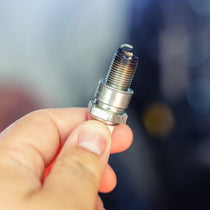
Spark plugs are the most common and most overlooked source of F150 rough idle. Plugs worn, fouled with carbon, or damaged will misfire at low RPM when combustion pressure is lower. The F150 uses four plugs – all four should be replaced together every 100 hours. Inspect the old plugs when you pull them: heavy carbon fouling suggests a rich running condition; white or chalky deposits suggest lean. Either finding points toward the next diagnostic step.
Fuel Injector Deposits
Partial injector clogging causes uneven fuel delivery across cylinders, which produces a rough, uneven idle. This is especially common in engines that sit unused for extended periods with ethanol fuel in the system. A quality fuel injector cleaner added to a fresh tank can help in mild cases. Persistent rough idle after clean plugs often points to injectors as the next area to address.
Vacuum Leaks in the Intake System
Unmetered air entering the intake through a cracked hose, loose fitting, or damaged gasket creates a lean mixture that causes rough idle and stalling. A vacuum leak often produces a faint hissing sound audible near the intake manifold and throttle body area. Inspect all intake hoses and connections for cracks, hardening, or looseness.
Throttle Body Contamination
Carbon deposits on the throttle body plate and bore interfere with airflow at idle, causing erratic idle quality. Cleaning the throttle body with an appropriate cleaner is a straightforward service item that is frequently overlooked. Remove the throttle body for proper cleaning – do not spray cleaner directly into a running engine.
Compression Testing – Baseline Diagnostic
If rough idle persists after addressing spark plugs, injectors, and the throttle body, a compression test confirms whether the issue is mechanical. On a Yamaha F150 in good condition, expect approximately 150–180 PSI per cylinder, with all four cylinders within 10% of each other. A cylinder reading significantly below the others points to a valve, ring, or gasket issue requiring professional diagnosis.
Idle Control Issues
The F150 uses an electronic idle air control (IAC) system to maintain consistent idle speed. A faulty IAC valve or a sensor sending incorrect data to the ECU can cause hunting idle, low idle, or stalling. IAC problems are typically confirmed through diagnostic scanning and are less common than the mechanical causes above. If plugs, injectors, and the throttle body have all been addressed and idle quality remains poor, scan for fault codes as the next step.
Yamaha F150 Alarm Codes Explained
The Yamaha F150 uses a buzzer alarm system to communicate fault conditions. The F150's alarm is a steady tone – it does not produce distinctly different beep patterns the way some other engines do. The conditions it signals are distinguished by accompanying gauge behavior, engine response, and whether the alarm occurs in a specific operating state. When an alarm sounds, your first action should always be to reduce throttle immediately and come off plane.
|
Command Link and YDS Note On F150 installations paired with Yamaha Command Link or Command Link Plus (CL+) gauges, fault codes are displayed directly on the gauge screen – these are your most specific diagnostic tool. The gauge may show the condition in text (e.g., 'Overheat', 'Check Engine') alongside the alarm. If your installation uses CL+ gauges, note any displayed code before shutting down. For non-Command Link installations, a Yamaha YDS (Yamaha Diagnostic System) scan by a dealer is the fastest way to read stored fault codes. |
Alarm Code Reference Table
| Alarm condition | Typical indicator | Engine response | First action |
|---|---|---|---|
| Overheat | Continuous tone; temp gauge high or tell-tale absent | Engine may reduce power or shut down | Reduce throttle; shut down if tell-tale is absent; inspect impeller and intake screens |
| Low oil pressure | Continuous tone; oil pressure warning light | Engine may shut down automatically | Shut down immediately; check oil level. Do not restart until cause is confirmed. |
| Water in fuel | Tone sounds in neutral only; clears when shifted into gear on many models | Engine continues running normally | Shift into gear to silence temporarily; drain water separator bowl and replace filter element |
| Over-rev (RPM limit) | Brief tone at rpm ceiling | ECU cuts cylinders to limit RPM | Reduce throttle; adjust propeller pitch if this occurs at normal wide-open throttle RPM |
| Check engine / sensor fault | Tone with check engine light or Command Link code displayed | Engine may enter reduced power mode | Note gauge code; reduce speed; have engine scanned for fault codes before further use |
| Safety lanyard disconnected | Tone on key-on when lanyard is absent | Engine will not start | Check lanyard is properly seated in switch; inspect switch for corrosion |
| Maintenance reminder | Periodic tone; maintenance indicator on Command Link | No performance effect | Reset via Command Link MODE button (hold 5 seconds, select CAL 1) after completing 100-hour service |
What to Do When an Alarm Sounds
- Reduce throttle immediately and come off plane
- Identify the accompanying gauge behavior – check temperature, oil pressure, and any warning lights at the helm
- If using Command Link or CL+ gauges, note any fault code or text displayed on the screen
- If overheating is suspected, shut down and check the tell-tale water stream
- Do not restart the engine until the cause of the alarm has been identified
- If the alarm source cannot be confirmed at the dock, have the engine scanned for stored fault codes before next use
Yamaha F150 Fuel System Problems
The F150 fuel system is straightforward by modern standards – a low-pressure lift pump draws fuel to the VST, and a high-pressure pump delivers it to the injectors. Most fuel system problems resolve with filter replacement and fresh fuel. When they do not, fuel pressure testing quickly identifies whether the cause is filtration, pump delivery, or injector-side.
Water in Fuel
Water contamination causes misfires, rough running, hard starting, and stalling. Water enters the system through condensation in the tank, degraded fuel caps, contaminated marina fuel, or ethanol phase separation. A quality fuel water separator is the best defense – inspect the bowl regularly and drain it at the first sign of water or cloudiness.
Clogged Fuel Filters
The F150 uses a primary inline filter and a secondary VST screen. Both should be replaced every 100 hours. Neglecting either leads to fuel starvation under high demand, high-RPM power loss, and potential pump damage from sustained lean operation.
Failing Fuel Pumps
The F150 uses a low-pressure lift pump and a high-pressure pump. Either can fail over time. Fuel pressure testing is the only reliable diagnostic – do not guess. VST inlet pressure should be approximately 36–44 PSI; rail pressure at idle should be approximately 43–51 PSI. A pressure drop at the VST points to the lift pump; a drop at the rail points to the high-pressure pump.
Ethanol-Related Fuel Issues
Ethanol absorbs moisture and phase-separates from gasoline when fuel sits for extended periods, creating a water-alcohol layer at the bottom of the tank. Ethanol also degrades rubber fuel lines and seals over time. Use fuel stabilizer during any storage longer than 30 days and run the engine long enough after adding it to treat the entire fuel system – not just the tank.
Step-by-Step Fuel System Diagnosis
- Inspect the primary fuel filter for contamination, discoloration, or restriction – replace if in doubt
- Check the fuel water separator bowl for visible water or debris
- Visually and by smell inspect the fuel in the tank for contamination or phase separation – stale or phase-separated fuel smells sour and may appear cloudy
- Test low-pressure fuel delivery at the VST inlet – target approximately 36–44 PSI
- Test high-pressure fuel at the fuel rail – target approximately 43–51 PSI at idle
- If pressure is low at the rail but normal at the VST, the high-pressure pump is suspect
- If pressure is low at the VST, inspect the lift pump and primary filter
Yamaha F150 Cooling System Maintenance
Consistent cooling system maintenance is the single most effective way to prevent serious F150 problems. The cooling system is the most failure-prone major system on any outboard used in saltwater – and almost every cooling failure is entirely preventable with regular service.
Water Pump Service Interval
Replace the water pump impeller every 100 to 200 hours, or annually for engines used seasonally. Do not wait for symptoms – impeller failure is sudden, and even brief overheating can cause significant engine damage. A Yamaha water pump service kit includes the impeller, housing wear plate, seal, and related gaskets.
Thermostat Replacement Interval
Inspect the thermostat every two to three seasons and replace it proactively during any water pump service. Thermostats are inexpensive and the labor to access them is already covered during a water pump service – replacement at the same time costs almost nothing extra.
Flushing the Cooling System
Flush with fresh water after every saltwater use. Use the flush port or motor flushing muffs and run the engine at idle for at least five minutes to purge salt and debris from the entire circuit. An annual flush with a commercial descaling solution removes mineral deposits that accumulate even with regular freshwater flushing.
Preventing Saltwater Corrosion
Saltwater accelerates corrosion throughout the cooling system – passages, thermostat housing, and lower unit. The thermostat housing bore is a known weak point on all F150 years, including current production; it should be visually inspected for internal corrosion annually. Annual application of a corrosion inhibitor to exposed metal surfaces, combined with consistent freshwater flushing, significantly extends component life.
Preventing Yamaha F150 Problems
Follow the 100-Hour Service Schedule
The 100-hour service is the foundation of F150 reliability. It covers oil and filter change, gear lube replacement, fuel filter replacement, spark plug replacement, and a full visual inspection of belts, hoses, anodes, and connections. Skipping or delaying this service is the single leading cause of preventable F150 problems – the cost is a fraction of what a single avoidable repair will run.
Inspect Fuel Filters Regularly
Check the primary fuel filter and water separator every 50 hours, and replace both every 100 hours or at the first sign of restriction or contamination. Running a clogged filter stresses both fuel pumps simultaneously – two problems that compound each other quickly and lead to expensive repairs.
Replace Spark Plugs at 100 Hours
Worn plugs reduce combustion efficiency, cause misfires, and place additional load on the ignition coils. The replacement is straightforward and inexpensive. Use NGK or Denso plugs specified for the F150 – do not substitute automotive plugs.
Inspect the Impeller Visually Every Season
Even if the engine is not yet at the 200-hour interval, inspect the impeller at the start of each season. A cracked or hardened impeller should be replaced regardless of hour count. The cost of an impeller kit is negligible compared to the cost of a single overheating incident.
Use Quality Fuel and Stabilizer
Use fresh fuel with the lowest available ethanol content. Add a quality marine fuel stabilizer any time the engine will sit unused for more than 30 days, and run the engine long enough after adding it to ensure treated fuel reaches the injectors and VST. This single habit prevents a significant share of all off-season fuel system problems.
Yamaha F150 Maintenance Checklist
Pre-Trip Inspection
- Check engine oil level
- Inspect tell-tale port – confirm water flow within 30 seconds of starting
- Check fuel water separator bowl for contamination
- Inspect propeller for damage or missing hardware
- Confirm battery charge and starting performance
- Check safety equipment including lanyard condition and seating
100-Hour Service Tasks
- Change engine oil and filter
- Replace both fuel filters (primary and VST screen)
- Replace all four spark plugs
- Change the lower unit gear lube
- Inspect water pump impeller – replace if due or if any vanes show cracking
- Inspect belts and hoses for wear, cracking, or hardening
- Inspect and replace zinc anodes as needed
- Clean and inspect all electrical connections; apply dielectric grease
- Flush the cooling system thoroughly with fresh water
Annual Maintenance Items
- Replace the water pump impeller regardless of hour count
- Inspect thermostat and replace if in doubt or if access is already open
- Perform full cooling system descaling flush
- Inspect fuel lines and connections for cracking or deterioration
- Load test the battery and replace if capacity has degraded
- Inspect lower unit seals for weeping or leaks
- Apply corrosion inhibitor to exposed metal surfaces including thermostat housing
- Inspect thermostat housing bore for internal corrosion – especially on saltwater-use engines
Long-Term Storage Preparation
- Change engine oil before storage – used oil contains acids that damage bearings over extended storage
- Fog the cylinders with storage oil through the spark plug holes
- Fill the fuel tank and add stabilizer, then run the engine to treat the entire fuel system
- Flush the cooling system completely with fresh water before storage
- Remove the battery, fully charge it, and store in a cool dry location on a maintainer
Frequently Asked Questions About Yamaha F150 Problems
Why is my Yamaha F150 overheating?
The most common cause is a worn or failed water pump impeller. If the impeller is intact, check the water intake screens for blockage and inspect the thermostat. Overheating should always be investigated immediately – continued operation with an overheating engine can cause serious and expensive internal damage including warped heads and blown head gaskets.
What years of Yamaha F150 should I avoid?
Based on documented owner and technician reports, 2004–2006 F150 engines require the most scrutiny when buying used. These years are most likely to have the original counter-balancer shaft design – which Yamaha revised at least five times through 2020 – and some 2006–2007 units show exhaust passage corrosion. This does not make these engines unusable; it means the balancer generation must be verified and a professional inspection performed before purchase. Engines from 2013 and later represent the most refined production and have the fewest known mechanical issues.
What are the fuel pressure specs for a Yamaha F150?
On the Yamaha F150, target VST inlet pressure is approximately 36–44 PSI. Fuel rail pressure at idle should be approximately 43–51 PSI, depending on model year. A pressure drop of more than 5 PSI under load at wide-open throttle indicates a fuel delivery restriction. Always verify against the service manual for your specific model year – these values have varied slightly across the production run.
Why does my Yamaha F150 lose power at high speed?
High-RPM power loss is most often caused by a clogged fuel filter or a failing high-pressure pump. Replace the primary fuel filter first. If the problem persists, test fuel pressure at the VST and fuel rail against the specifications above. Also inspect the propeller – a damaged or incorrectly pitched propeller prevents the engine from reaching its RPM range regardless of engine condition.
How long does a Yamaha F150 engine last?
A well-maintained Yamaha F150 can exceed 3,000 hours of recreational operation. Commercial applications with documented service histories have reached 8,000-plus hours. Longevity depends primarily on three factors: adherence to the 100-hour service schedule, consistent cooling system maintenance, and prompt attention to any developing issues. Saltwater use and deferred maintenance are the two main factors that significantly shorten engine life.
How often should the water pump be replaced on a Yamaha F150?
Replace the water pump impeller every 100 to 200 hours, or at least once per season for engines that see moderate annual use. Do not wait for overheating symptoms – impeller failure is sudden and the resulting damage can be expensive very quickly. If you do not know when the impeller was last replaced, replace it now.
What causes rough idle on a Yamaha F150?
The most common causes are fouled spark plugs, fuel injector deposits, and throttle body contamination. Start with a spark plug inspection and replacement – all four at once, every 100 hours. If rough idle persists after fresh plugs, address the fuel system. A compression test (expect 150–180 PSI per cylinder, within 10% across all four) rules out mechanical causes before proceeding to more involved diagnosis.
What should I do if my Yamaha F150 alarm goes off?
Reduce throttle immediately and identify what the gauges are showing. On Command Link or CL+ installations, note any fault code or text on the gauge display. A continuous alarm with no tell-tale water stream is almost certainly overheating – shut down immediately. A continuous alarm with the oil pressure warning light requires immediate shutdown regardless of oil level appearance. Do not continue running the engine until the source of the alarm has been identified and resolved.
The Bottom Line
The Yamaha F150 is one of the most dependable outboard engines ever built – and its track record holds regardless of year, provided the engine has been properly maintained. The overwhelming majority of problems owners encounter (overheating, power loss, rough idle, hard starting) trace back to deferred maintenance rather than fundamental engine failures. Follow the 100-hour service schedule, stay ahead of the cooling system, keep fresh fuel in the tank, and your F150 will deliver reliable performance for decades. For used-engine buyers: verify the counter-balancer generation on pre-2008 engines and inspect the thermostat housing bore before purchase – those two checks tell you everything you need to know about how the engine has been treated.